
FIFA World Cup 2026 Betting
World Cup 2026 Betting Guide NZ - Markets, Odds & Tips
 Available in US
I remember standing in a pub in Wellington in December 2009, watching the All Whites qualify for the 2010 World Cup, and the first thing half the bar did was pull out their phones to check what odds TAB was offering. That is New Zealand in a nutshell – we do not separate sport from the punt. Now, sixteen years later, the All Whites are heading back to the world stage, and this time the tournament is bigger, longer, and loaded with more betting markets than anything we have seen before.
The 2026 FIFA World Cup is a different animal. Forty-eight teams across three countries, 104 matches spread over 39 days, and a format that rewards risk-takers who understand how expanded fields reshape the odds. For Kiwi punters, the timing could not be better: every match kicks off during NZ afternoon hours, TAB NZ has been expanding its football markets since securing the Entain operational partnership, and your winnings remain tax-free under New Zealand law.
This world cup 2026 betting guide is the resource I wish I had built before the last tournament. It covers the new format and what it means for your punts, every market type available on TAB NZ, how to read and exploit decimal odds, bankroll strategy for a marathon event, and the common traps that burn Kiwi punters every four years. Whether you are placing your first ever football bet or you have been punting since the days of the old TAB coupon, the objective here is the same: sharper decisions, better value, and more enjoyment across every match day from 11 June to 19 July.
The New 48-Team Format: What Changes for Punters
When FIFA announced the expansion from 32 to 48 teams, my first reaction was not about the football – it was about what it would do to the group stage odds. Every World Cup since 1998 ran with eight groups of four, a system punters had spent decades modelling. In 2026, we get twelve groups of four, 104 total matches instead of 64, and an extra knockout round. The rulebook for World Cup betting has been rewritten, and most casual punters have not caught up yet.
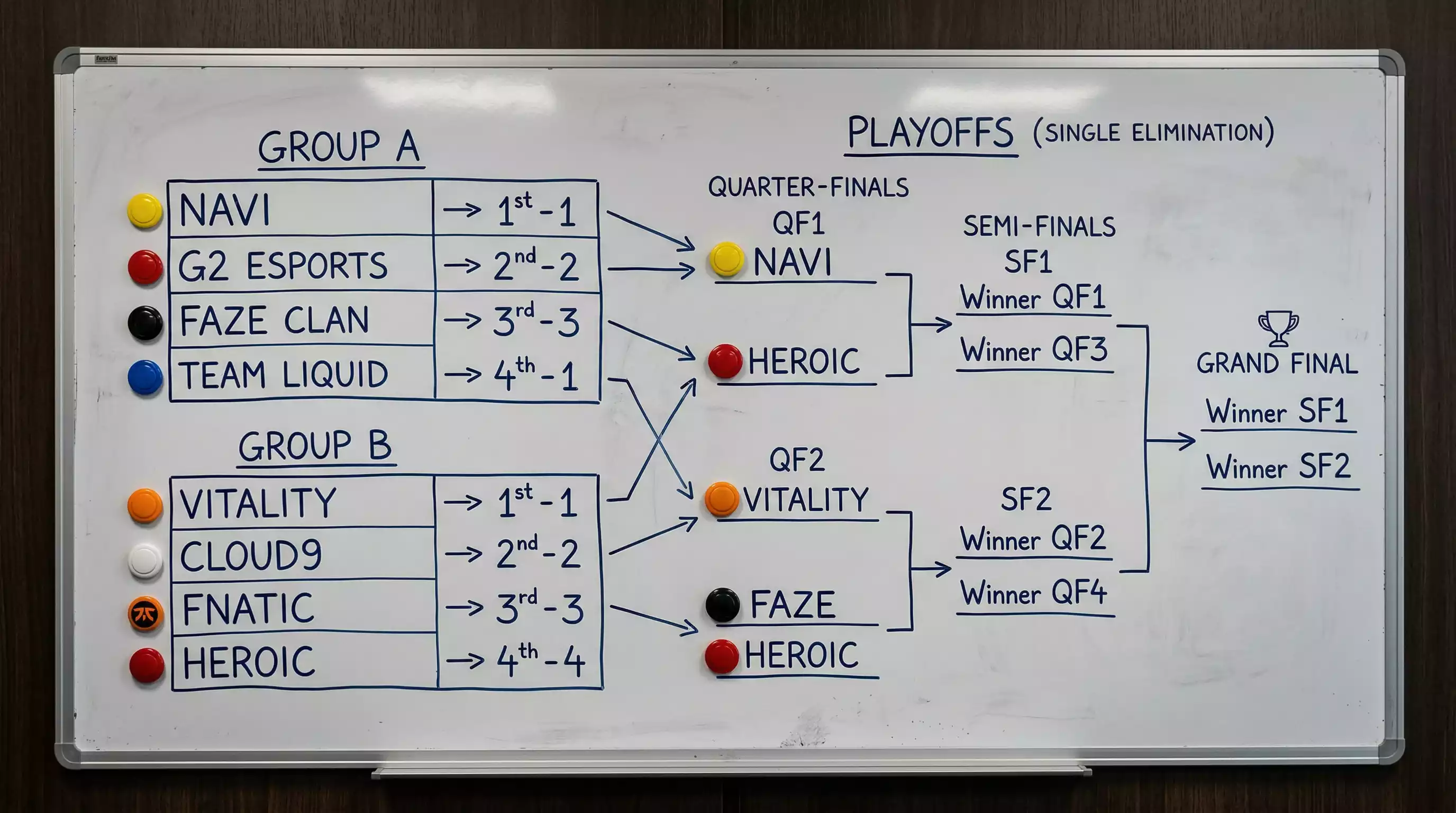
The group stage alone grows from 48 matches to 72. That is 50% more opportunities to find value before the knockouts even begin. Each group still contains four teams, but the qualification pathway is more forgiving: the top two from each group advance, and the eight best third-placed teams also progress to a Round of 32. In previous World Cups, finishing third in your group meant going home. Now it means you might face a group winner from the other side of the draw. For a team like the All Whites, this is transformative – a single win and a draw in the group stage could be enough to squeeze through.
The tournament spans 39 days, from the opener at Estadio Azteca in Mexico City on 11 June to the final at MetLife Stadium in New Jersey on 19 July. Matches are split across three countries and sixteen stadiums, with the United States hosting eleven venues, Mexico three, and Canada two. The geographic spread matters for betting because travel fatigue, altitude differences between Mexico City and sea-level US venues, and climate variation from Vancouver’s mild June to Houston’s sweltering heat all influence match outcomes in ways that pure form analysis misses.
How More Teams Affect the Odds
The most immediate effect is dilution. With 48 teams instead of 32, the outright winner market stretches across more contenders, which means the favourite’s implied probability drops and the longshots get slightly shorter. In 2022, Argentina opened around 6.50 in decimal odds before the tournament. In 2026, I expect the top favourite to open closer to 5.00 or even shorter, not because they are a better team, but because bookmakers need to account for more potential upsets across a larger field.
Group stage betting becomes both easier and harder. Easier because weaker nations – teams that would not have qualified under the old format – create lopsided matchups with clearer favourites. Harder because the third-place qualification route muddies the incentive structure in the final round of group matches. A team that has already secured third might rest players, while a team chasing second could push aggressively. These situational factors are where sharp punters find edges that the market has not priced in.
The expanded knockout stage also reshapes each-way and tournament progress markets. Reaching the quarter-finals now requires winning two knockout matches instead of one, which makes “to reach the quarters” bets more challenging and potentially better value for genuine contenders. Meanwhile, the Round of 32 introduces a new market layer entirely – you can bet on individual Round of 32 matchups once group positions are confirmed, and these early knockout games often feature significant mismatches between group winners and third-place qualifiers.
For Kiwi punters specifically, the format change means the All Whites have a realistic path beyond the group stage for the first time in history. In 2010, New Zealand drew all three group matches but still went home because only the top two advanced. Under the 2026 rules, three draws and four points would very likely have been enough for a best third-place spot. That alone should shift how you think about backing New Zealand in the group markets.
World Cup Betting Markets Explained
A punter I know once told me he only ever bets on the outright winner because “everything else is too complicated.” He has been doing this for twenty years and has collected exactly one payout – France in 2018. The irony is that the markets he ignores are where the real value lives. TAB NZ offers a broad spread of World Cup markets, and understanding each one is the difference between treating the tournament as a lottery and treating it as a 39-day project with dozens of data-driven opportunities.
I am going to walk through every major market category available to New Zealand punters, from the straightforward to the specialist. If you already know your head to heads from your handicaps, skip ahead. But if you have ever stared at a TAB NZ screen wondering what “draw no bet” actually protects you from, this section is built for you.
Outright Winner
The outright winner market is the simplest bet at any World Cup: pick the team that lifts the trophy after the final on 19 July. You place your punt before or during the tournament, and it settles only when the last whistle blows at MetLife Stadium. Decimal odds on TAB NZ tell you exactly what your return is – multiply your stake by the odds and that is your total payout including the original stake.
With 48 teams, the outright market is deeper than ever. The top five or six favourites – typically the recent champions, host nations, and dominant European sides – cluster at the short end between 4.00 and 8.00. Below them sits a tier of dark horses between 15.00 and 30.00, teams capable of a deep run but unlikely to win seven consecutive knockout matches. And then there is the long tail: teams priced at 100.00 and beyond, where the odds imply less than a 1% chance of winning. The All Whites sit firmly in that long tail, but the outright market is not where you back New Zealand anyway – that is what group markets are for.
The key to outright betting is timing. Odds shift as injury news breaks, as warm-up results filter through, and as public money floods in on popular picks. If you have a strong view on a contender, placing early locks in a price that will almost certainly shorten if that team performs well in the group stage. Conversely, if a favourite stumbles in their opening match, their outright odds drift, and that can be a buying opportunity if you believe the wobble is temporary.
Group Stage Bets
Group stage markets are where I spend most of my World Cup budget, and I would argue they offer the best risk-reward ratio of the entire tournament. You can bet on which team wins a specific group, which two teams qualify, exact finishing order within a group, or whether a particular team finishes in the top two. These markets settle after the third round of group matches, meaning your money is tied up for roughly two weeks rather than five.
The group winner market is straightforward: pick the team that tops the group. In a group like Group G – Belgium, Iran, New Zealand, Egypt – Belgium is the heavy favourite to finish first, and their odds will reflect that, probably sitting around 1.45 to 1.60. The value is rarely on the favourite in these markets. Instead, look at the “to qualify” market, where you are betting on a team finishing in the top two or as one of the best third-placed sides. A team like Egypt, priced generously because of Belgium’s dominance, only needs to beat New Zealand and take something from their other match to have a strong chance of progressing.
Exact finishing order bets pay significantly better because you need to predict all four positions correctly, but the 2026 format makes these harder to model. The third-place safety net means teams might play the final group match with different intensity depending on whether they have already secured qualification. I generally avoid exact order bets unless I have a very strong read on a group’s dynamics.
Match Betting: Head to Head, Asian Handicaps, Totals
Match betting is the bread and butter of World Cup punting – picking outcomes for individual fixtures. The head to head market, also called 1X2, gives you three options: home win, draw, or away win. At a neutral-venue tournament like the World Cup, “home” and “away” are designated by FIFA’s draw, but crowd support can still tilt the atmosphere, especially when host nations play.
Draw no bet removes one of those three outcomes. If you back New Zealand draw no bet against Egypt, you win if New Zealand wins and get your stake returned if the match is a draw. You only lose if Egypt wins. The trade-off is shorter odds than a straight head to head pick, but the safety net makes it a favourite tool for punters who like a team but are not confident enough to rule out a stalemate.
Asian handicaps eliminate the draw entirely by applying a goal handicap to one team. If Belgium is -1.5 against New Zealand, Belgium must win by two or more goals for your bet to pay. If you back New Zealand +1.5, you win if New Zealand wins, draws, or loses by exactly one goal. Asian handicaps are the sharpest market in football betting because they force bookmakers to price the margin of victory, not just the result. I find the best value in handicap markets during the group stage, particularly when a strong team faces a weaker opponent with defensive discipline – the kind of match that ends 1-0 rather than the 3-0 the market expects.
Totals, or over/under goals, let you bet on the number of goals in a match without caring who scores them. The standard line is 2.5 goals – over 2.5 pays if three or more goals are scored, under 2.5 pays if two or fewer. World Cup group stage matches have historically averaged around 2.5 goals per game, which means the line is set right at the tipping point and both sides typically offer close to even money. The expanded 48-team format could push that average slightly higher because of the increased number of mismatches in the group stage, but I would not assume that trend will hold across all groups equally.
Specials and Player Props
Specials and player props add another dimension to World Cup betting. The top scorer or Golden Boot market lets you back individual players to finish as the tournament’s leading goalscorer. Tournament specials might include bets on the total number of red cards, whether any group will see all four teams finish on the same points, or which confederation will produce the winner. Player props can cover individual match performances – a player to score anytime, to be shown a card, or to register an assist.
TAB NZ’s specials range varies depending on the tournament phase, and more prop markets typically become available once the group stage draw is confirmed and squad announcements are made. Keep in mind that player props carry higher margins than match betting, meaning TAB NZ’s built-in edge is larger on these markets. I use them sparingly and only when I have a specific insight – such as a penalty-taking forward facing a team that has conceded a high rate of spot kicks in qualifying.
How to Read Decimal Odds – A Kiwi Refresher
If you have ever placed a bet at a TAB venue on race day, you already know decimal odds – you just might not have thought about the mechanics. Decimal is the standard format across New Zealand and Australia, and it is the simplest system in the world to understand once you see the logic. I have watched friends confidently punt on the Melbourne Cup for years, then freeze when they see football odds on screen because they assume it is more complicated. It is not.
Decimal odds represent your total return for every dollar staked, including the original stake. If the All Whites are listed at 5.00 to beat Egypt, a $10 punt returns $50 if they win – that is $40 profit plus your $10 back. If Belgium is at 1.35 against New Zealand, a $10 punt returns $13.50, with just $3.50 of that being profit. The lower the decimal number, the more likely the bookmaker believes that outcome is, and the less it pays. The higher the number, the less likely but the bigger the payday.
To calculate implied probability from decimal odds, divide 1 by the odds and multiply by 100. Belgium at 1.35 implies a 74.1% chance of winning (1 / 1.35 x 100). New Zealand at 5.00 implies a 20% chance. A draw at 4.50 implies 22.2%. Add those together and you get 116.3%, not 100%. That gap – 16.3 percentage points – is the bookmaker’s margin, also called the overround or vig. It is how TAB NZ makes money regardless of the result, and understanding it is fundamental to spotting value.
The overround varies by market and by match. High-profile fixtures like a World Cup semi-final tend to have tighter margins because they attract heavy volume and bookmakers compete on price. Group stage matches between lower-ranked teams might carry a wider overround because there is less data for the bookmaker to work with and fewer sharp bettors keeping the line honest. As a rule of thumb, if the combined implied probability of all outcomes in a market exceeds 110%, the margin is reasonable for a New Zealand punter. Above 115%, you are paying a premium, and the market needs to offer something truly compelling to justify a bet.
One more thing worth knowing: TAB NZ displays odds in decimal format by default, but if you are reading international coverage – particularly from British or American sources – you will encounter fractional (5/1) and American (+400) formats. The conversions are straightforward. Fractional 5/1 equals decimal 6.00 (divide the first number by the second and add 1). American +400 equals decimal 5.00 (divide by 100 and add 1 for positive American odds). If you want to go deeper on this topic, the decimal odds explainer breaks down every conversion with NZD examples.
Bankroll Management for a 39-Day Tournament
The 2014 World Cup nearly broke me. Not because I had bad picks – I actually hit several group stage bets in the first week – but because I had no plan for what to do with the profits, and by the quarter-finals I was staking four times my usual amounts on matches I had barely researched. The entire bankroll was gone before the semi-finals started. It was an expensive lesson in the one discipline that separates punters who survive a tournament from punters who watch the final with empty pockets.
A 39-day tournament with up to four matches per day is not a sprint. It is the longest World Cup in history, and the sheer volume of betting opportunities creates a psychological trap: the feeling that you need to have action on every match. You do not. My approach is to set a total World Cup bankroll before the tournament begins – money I can afford to lose entirely – and divide it into daily units. If my total bankroll is $500, I divide that across roughly 30 active betting days (some rest days have no matches), giving me approximately $16 per day. That does not mean I bet $16 every day. Some days have no matches worth backing, and the unused budget rolls into the next day’s allocation.
Stake sizing within that daily budget follows a simple rule: never risk more than 5% of your remaining bankroll on a single bet. If your bankroll has grown to $600 after a good first week, your maximum single stake is $30. If it has shrunk to $350, your maximum is $17.50. This sliding scale protects you from catastrophic losses on bad days while allowing you to capitalise when the bankroll is healthy. For multi-bets, I drop that threshold to 2-3% because the combined risk is higher.
The group stage is where bankroll discipline matters most, because it is where the volume temptation is strongest. Twelve groups produce 72 matches in roughly two weeks. If you bet on every match, you will burn through your bankroll before the knockouts. I aim for 3-5 bets per matchday during the group stage, which means passing on the majority of fixtures. The ones I skip are not necessarily bad bets – they are just matches where I do not have an edge strong enough to justify the stake. Discipline is saying no to a fair bet because a better one is coming tomorrow.
During the knockout stage, the dynamics shift. Fewer matches mean each one carries more weight, and the temptation flips from overexposure to oversizing. A punter who has been disciplined through the group stage might suddenly load up on a quarter-final because “this is the one I’ve been waiting for.” Stick to the 5% rule. The knockouts reward patience – odds move significantly as team news leaks hours before kick-off, and there is often better value available closer to match time than when the lines first open.
Spotting Value: The Punter’s Edge
What does a $20 World Cup punt and a $2 avocado at the supermarket have in common? Both are only worth buying if the price is right. Value betting is nothing more exotic than this: you back an outcome when the odds offered are higher than the outcome’s true probability deserves. If you believe New Zealand has a 30% chance of beating Egypt, any odds above 3.33 represent value. If TAB NZ is offering 3.80, you bet. If they are offering 2.90, you pass, even if you think New Zealand will win.
The concept is simple. Executing it consistently across 104 matches is the hard part, because it requires you to have your own probability estimate for every bet you consider. That estimate does not need to be perfect – it just needs to be more accurate than the market’s implied probability often enough to generate long-term profit. Over a sample size as large as a 48-team World Cup, even a small edge compounds.
There are several reliable sources of edge at a World Cup. The first is public bias. Casual punters flood money onto big names – Argentina, Brazil, France, England – which shortens their odds below fair value and pushes the odds of their opponents above fair value. If Brazil is overbet in the outright market, their group opponents (Morocco, Scotland, Haiti) are underbet by exactly the same margin. This is where you hunt.
The second source is informational edge. World Cup squads include players from dozens of leagues, and no single punter – or bookmaker – follows all of them equally. If you have been watching the Scottish Premiership all season, you know things about Scotland’s squad depth and tactical patterns that someone who only watches the Premier League does not. That knowledge has a price, and the market does not always reflect it.
The third, and most overlooked, source of value at an expanded World Cup is the format itself. Eight best third-placed teams qualifying for the knockouts creates a mathematical wrinkle. In groups where the favourite is dominant, the second and third spots become tightly contested, and the market often underestimates the chances of the perceived weakest team sneaking through in third. If the latest outright and group odds show a big gap between the second and third favourites in a group, there is often value on the longer-priced side precisely because third place is now a viable path.
Value betting requires record-keeping. Before the tournament starts, set up a simple spreadsheet: date, match, market, your estimated probability, the odds offered, stake, and result. After the group stage, review your estimates against actual outcomes. If your hit rate is close to or above your estimated probabilities, your process is sound and you should maintain your staking. If you are consistently overestimating favourites or underestimating draws, adjust for the knockouts. The spreadsheet is not glamorous, but it is the difference between punting and investing.

Betting Legally in New Zealand: Practical Steps for NZ Punters
I get asked this question at least once a week in the lead-up to any major tournament: “Can I use an overseas bookmaker for the World Cup?” The answer, as of June 2025, is a clear no. The Racing Industry Act 2020 amendments that took effect on 28 June 2025 formally extended TAB NZ’s monopoly to online betting, and offshore operators offering services to New Zealand residents are now explicitly prohibited. The Department of Internal Affairs enforces this, and while enforcement has historically been light on individual punters, the legal framework is unambiguous – TAB NZ is the only licensed operator for sports betting in this country.
Setting up a TAB NZ account is straightforward. You need to be 18 or older, provide standard identification, and link a New Zealand bank account or accepted payment method. Deposits are typically instant through online banking, and withdrawals process within one to two business days. The platform is operated by Entain under a 25-year contract signed in 2023, which means the technology behind the scenes is the same engine that powers major international platforms – a significant upgrade from the legacy system Kiwi punters dealt with for years.
There is one piece of genuinely good news in New Zealand’s gambling framework: winnings from betting are not taxed. Unlike punters in the United Kingdom who face operator-level taxation that is baked into the odds, or those in Australia where certain states impose point-of-consumption taxes, your World Cup winnings in New Zealand come home in full. A $100 bet at 5.00 that wins returns $500 to your account, and that is yours without any further obligations to Inland Revenue.
Advertising restrictions tighten significantly on 1 May 2026 – just six weeks before the World Cup kicks off. Under the new rules, gambling advertising is banned between 6:00 and 21:30, celebrity and athlete endorsements are prohibited, and outdoor advertising within 300 metres of locations frequented by minors is illegal. Penalties reach up to $5 million for companies. For punters, this means you will see far less promotional noise around the tournament than you might expect, which is actually a good thing – it reduces the impulse-bet triggers that lead to poor decisions. For a full breakdown of the regulatory framework, the TAB NZ World Cup betting guide covers deposits, features, and responsible gambling tools in detail.
Five Mistakes Kiwi Punters Make at World Cups
Nine years of covering tournament wagering markets has given me a front-row seat to the same errors repeating every four years. These are not obscure analytical missteps – they are the predictable behavioural traps that catch otherwise smart punters when the excitement of a World Cup overrides their usual discipline.
The first is betting on every match. With up to four fixtures per day during the group stage, the temptation to have skin in every game is enormous. But volume without edge is just entertainment with a negative expected return. The matches where you have a genuine analytical view – where you have watched both teams, understand the tactical matchup, and believe the market has mispriced the outcome – are the matches worth betting on. The rest are worth watching from the couch with a cold beer and no stake riding on them.
The second is loyalty bias toward the All Whites. This one is personal for every Kiwi punter. I want New Zealand to win every match, and that desire can warp how I assess their chances. If you genuinely believe the All Whites have a 25% chance of beating Egypt, back them. But if your heart is telling you 40% while your head says 20%, your heart is lying and your wallet will pay the price. The solution is not to avoid betting on the All Whites entirely – it is to be brutally honest about the probability and only back them when the odds exceed your honest assessment.
The third is chasing losses during the tournament. A bad day on matchday two does not need to be recovered on matchday three. The bankroll plan exists precisely for this situation. If you lose three bets in a row on the opening day and immediately double your stakes for the evening matches, you are no longer making analytical decisions – you are gambling emotionally. Walk away from the app, watch the next match for free, and come back tomorrow with a clear head and your standard stake sizes.
The fourth is ignoring the draw. World Cup group stage matches produce draws at a higher rate than most domestic leagues because teams are cautious, the stakes are high, and many matchups feature teams of similar quality who cancel each other out. In the 2022 World Cup, the group stage draw rate was close to 25%. Kiwi punters, conditioned by rugby where draws are vanishingly rare, tend to undervalue the draw in football betting. If you are betting head to head markets, make sure you have considered whether the draw is actually the most likely outcome before picking a side.
The fifth is overloading on multi-bets. Multis are wildly popular in New Zealand – combining several selections into one bet with compounding odds is exciting, and a winning four-leg multi can pay more than a week’s wages. But multi-bets are also where the bookmaker’s margin compounds against you. If TAB NZ takes a 5% edge on each leg, a four-leg multi gives them a compounded edge of roughly 18.5%. I am not saying avoid multis entirely – a well-constructed two or three-leg multi with genuinely correlated outcomes can be a sharp play. But ten-leg accumulators are lottery tickets dressed up as strategy. Know the difference.
Your World Cup Betting Toolkit Starts Here
The 2026 FIFA World Cup betting guide I have laid out here is not a prediction sheet or a set of hot tips. It is a framework. The expanded 48-team format creates more betting opportunities than any previous World Cup, but those opportunities only translate into value if you understand how the markets work, manage your bankroll across 39 days, and approach each bet with honest probability estimates rather than wishful thinking.
For Kiwi punters, this tournament carries an extra layer of meaning. The All Whites are back at the World Cup after sixteen years, the matches kick off during NZ afternoons, and TAB NZ’s Entain-powered platform is better equipped for football markets than it has ever been. Use the knowledge from this guide as your foundation, track your bets from matchday one, and treat every punt as a decision that should stand on its own analysis – not on the emotion of the moment.
I will be covering every group, every market shift, and every value angle across the All Whites campaign and the wider tournament right here on nzfootballwc2026.com. Set your bankroll, learn the markets, and show up on 11 June ready to punt with a plan.
