
FIFA World Cup 2026 Betting
MetLife Stadium — 2026 World Cup Final Venue Guide
 Available in US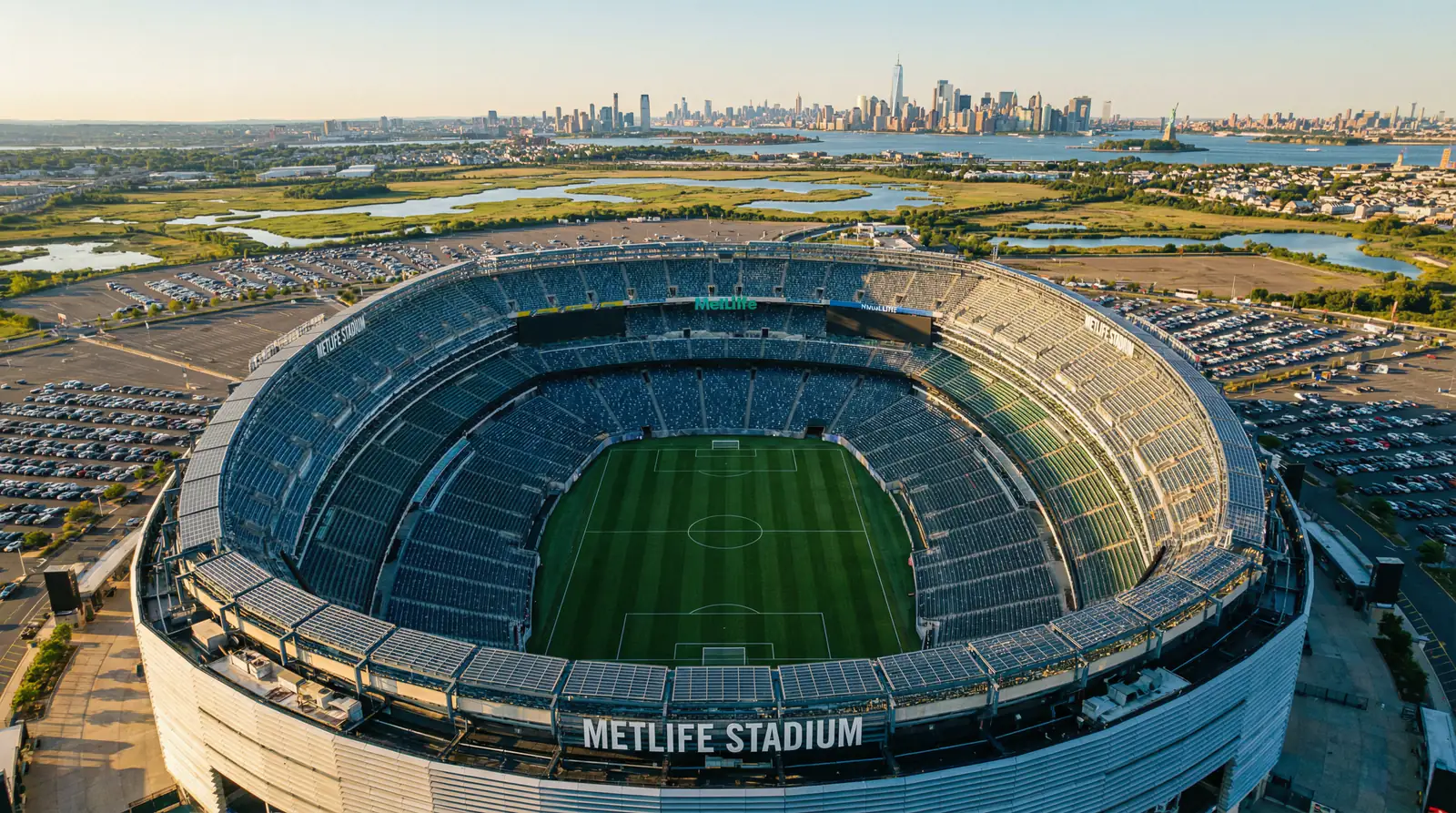
On 19 July 2026 at 9am NZT — a Sunday morning in New Zealand — the FIFA World Cup final will kick off at MetLife Stadium in East Rutherford, New Jersey. I have covered finals at the Maracana, at Lusail, at the Stade de France, and each venue carried its own gravity. MetLife will be different. It is an American stadium built for American football, repurposed for the biggest match in the global game, sitting in the shadow of Manhattan’s skyline. If the All Whites somehow reach this stage, it would be the greatest achievement in New Zealand sporting history. Even if they do not, the final’s betting markets will be the last act of a 39-day tournament — and MetLife is the stage where those markets resolve.
About MetLife Stadium
MetLife Stadium opened in 2010, replacing the old Giants Stadium that had stood since 1976. It is the home of two NFL franchises — the New York Giants and the New York Jets — and has hosted everything from Super Bowl XLVIII to WrestleMania. The stadium seats approximately 82,500 in World Cup football configuration, making it the largest venue at the 2026 tournament. Unlike SoFi Stadium in Los Angeles or BC Place in Vancouver, MetLife is fully open-air with no roof or canopy. The playing surface will be natural grass installed specifically for the World Cup, replacing the usual FieldTurf artificial surface. FIFA’s grass installation at MetLife has been tested extensively, given the venue’s importance as the final host.
The stadium sits in the Meadowlands Sports Complex, a sprawling entertainment district in northern New Jersey. Despite being marketed as a New York venue, MetLife is technically in New Jersey — across the Hudson River from Manhattan but connected by an extensive transit network. The location matters for atmosphere: a World Cup final in the New York metropolitan area will draw a global crowd, with diaspora communities from every footballing nation within driving distance. The atmosphere will be unlike any club or league match these players have experienced — a genuinely neutral cauldron where 82,000 people represent the world rather than a single nation.
All Matches at MetLife
MetLife hosts matches throughout the tournament, from the group stage through to the final. Key fixtures include group matches from multiple pools, Round of 32 ties, quarter-finals, a semi-final, and the final itself. For Kiwi punters, the progression of matches at MetLife means you can track how the pitch holds up across the tournament — grass quality at a venue hosting this many fixtures can deteriorate, and by the semi-final and final stages, surface conditions may influence the style of football played. Worn grass favours teams that keep the ball on the ground less and play more directly, which could be relevant when assessing late-tournament head-to-head markets.
| Round | Date (NZT) | Kick-Off (NZT) |
|---|---|---|
| Group Stage (multiple) | Mid-June | Various |
| Round of 32 | Early July | Various |
| Quarter-final | Mid-July | TBC |
| Semi-final | 16 July | TBC |
| Final | 20 July | 9:00am |
The final kicks off at 4pm ET on 19 July, which translates to 9am NZT on Sunday 20 July. A Sunday morning final is unusual for Kiwi viewing habits — most of us associate World Cup finals with late-night or early-morning drama. A 9am start means you can watch over breakfast, which is civilised compared to the 7am kick-off of the 2022 final in Qatar or the 5am start of the 2018 final from Moscow. Pubs and fan zones across New Zealand will open early for the occasion, and TAB NZ will have final-specific markets live from the morning.
The 2026 World Cup Final: 19 July
Finals are their own beast. I have analysed World Cup final betting markets across seven tournaments, and the patterns are consistent. The match tends to be tight — the average goal tally in finals since 1998 is 2.7, lower than the tournament average. Extra time occurs roughly every other final. The favourite wins more often than in any other round, because the teams that reach the final have already survived six or seven high-pressure matches and the stronger squad’s depth advantage compounds over the course of the tournament. Penalty shootouts add another dimension entirely — since 2006, three of five finals have been decided either in extra time or on penalties, rewarding the team with stronger nerves and deeper bench options for fresh legs.
For outright betting, the final represents the resolution of a position you should have taken weeks earlier. If you backed Argentina before the tournament at 6.50 and they reach the final, that bet is already profitable in expectation — the final is just the event that triggers the payout. The strategic value is in early outright positioning, not in waiting for the final to be set and backing a team at 1.70.
Match-specific final markets offer different opportunities. The first goalscorer in a World Cup final carries enormous emotional weight and equally enormous variance — it is a lottery disguised as a betting market. More reliable are the structural markets: total goals, both teams to score, and the method of victory (regular time, extra time, or penalties). Across the last six finals, four went to either extra time or penalties, which means the “match to go beyond 90 minutes” market at around 2.50 has historically offered value. If that pattern holds in 2026, Kiwi punters can build their final-day strategy around it.
MetLife and Major Events
MetLife’s track record as a major-event venue is relevant because it informs how the stadium handles atmosphere, logistics, and crowd flow — all of which affect the matchday experience and, indirectly, the betting landscape. Super Bowl XLVIII in 2014 was the first outdoor cold-weather Super Bowl, and the logistical lessons from that event have shaped MetLife’s operational playbook. Copa America 2024 matches at MetLife drew capacity crowds and produced pitch conditions that players praised. The stadium’s sightlines, originally designed for American football’s wider field, create a slight distance between the front row and the touchline that reduces the tunnel-like intensity of European stadiums but improves the overall viewing experience for upper-tier seats.
For the World Cup final, FIFA will take full operational control of the venue several days in advance, installing bespoke branding, media infrastructure, and security protocols. The pitch will be relaid or patched if earlier matches have caused significant wear. By the time two teams walk out for the final, MetLife will look and feel nothing like the NFL venue it is for most of the year — it will be transformed into the centre of the footballing world, a temporary cathedral for a sport that America is still learning to worship at scale.
Final Betting Markets
The World Cup final generates more betting volume than any other single football match in a four-year cycle. TAB NZ will offer an expanded menu of markets for the final — everything from the standard head-to-head and total goals to novelty markets like the minute of the first goal, the number of corners, and whether the match goes to extra time. For Kiwi punters, the volume of available markets creates both opportunity and risk. Opportunity, because niche markets are often less efficiently priced than the headline odds. Risk, because the temptation to over-bet on the final — the emotional climax of a 39-day tournament — can blow a carefully managed bankroll in a single afternoon.
My approach to final betting is conservative: one pre-match position on the result (typically the favourite or the draw), one structural market (over/under goals or extra time), and one live bet placed during the match based on how the game unfolds. Three bets, controlled stakes, no emotional chasing. If you have been disciplined throughout the tournament, the final is not the time to abandon strategy. MetLife is just a stadium. The 2026 World Cup final is just a match. Treat it accordingly, and you walk away from the tournament with your bankroll intact regardless of who lifts the trophy.
Imagine the All Whites standing in that tunnel at MetLife on 19 July. It is the thought that every Kiwi punter carries from the group stage onwards — improbable, irrational, and worth the price of admission. Every stadium at this World Cup plays its part in the story, but MetLife writes the final chapter.
