
FIFA World Cup 2026 Betting
World Cup 2026 Value Bets - Smart Punts for Kiwis
 Available in US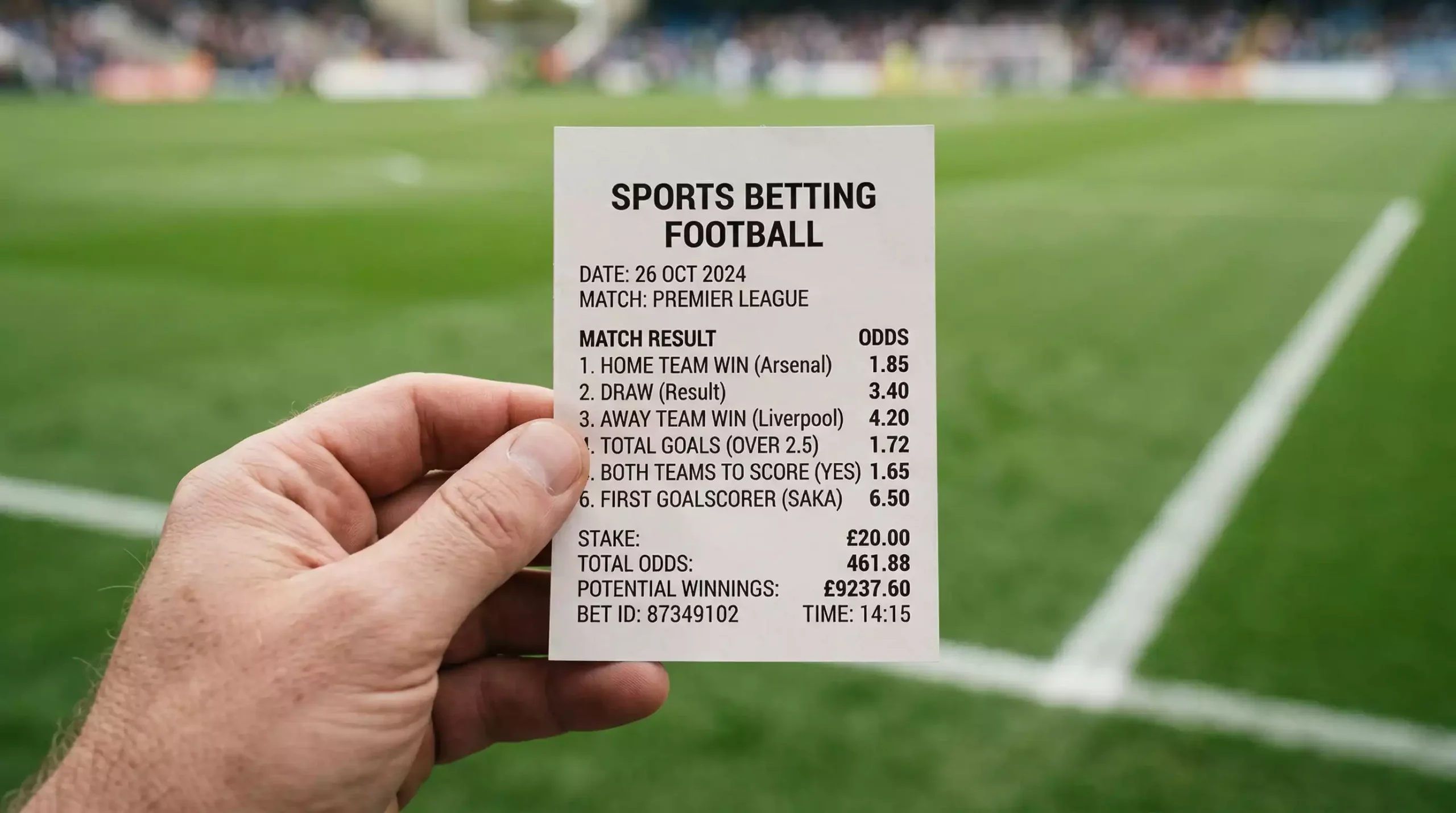
A mate in Auckland once told me he backed France to win the 2022 World Cup at 7.50 the morning after their opening loss to Tunisia. Not because he had some tactical insight the market missed – he simply reckoned France were “too good to go out early” and the odds looked fat. France made the final. He collected $375 from a $50 punt. And here is the thing: he had found genuine value, even if he could not articulate why at the time. The market had overreacted to a dead-rubber loss with a rotated squad, and the price did not reflect France’s true probability of winning the tournament.
Value betting is the discipline of identifying when the odds offered by a bookmaker imply a lower probability than you believe the actual probability to be. If you think an outcome has a 25% chance of happening and TAB NZ is offering odds that imply 18%, that gap is your edge. Over dozens or hundreds of bets, consistently finding that gap is what separates punters who grind a profit from punters who grind their bankroll to dust.
The 2026 FIFA World Cup, with its expanded 48-team field and 104 matches, is the largest value-hunting ground the sport has ever produced. More teams mean more unfamiliar matchups, and unfamiliar matchups are where bookmakers’ models are weakest and where punters with specific knowledge can exploit inefficiencies. This is not about guessing – it is about finding World Cup 2026 value bets through structured analysis.
How to Spot a Value Bet at the World Cup
Every decimal odd has a hidden number inside it, and most punters never bother to extract it. That number is the implied probability – the market’s estimate of how likely an outcome is. Understanding implied probability is not optional for value betting; it is the entire framework.
The formula is simple: divide 1 by the decimal odds, then multiply by 100. If TAB NZ offers 4.00 on a particular outcome, the implied probability is 1 / 4.00 = 0.25, or 25%. If you believe the true probability is 30% or higher, the bet carries positive expected value. If you think it is closer to 20%, the bet is overpriced from your perspective and you should pass.
Where does your “true probability” estimate come from? Three sources, in order of reliability. First, historical data: how often does a team of similar FIFA ranking beat a team of the opposition’s ranking in World Cup group-stage matches? The answer varies, but the data exists and it is publicly accessible. Second, current form: qualifying results, recent friendlies, and underlying performance metrics like expected goals (xG) give you a picture of where a team sits right now, not where it sat at the last World Cup. Third, contextual factors that models miss: squad depth for a 39-day tournament, travel distances between venues, altitude in Mexico City (2,240 metres above sea level at Estadio Azteca), and motivation – a team already eliminated plays differently from a team fighting for its tournament life.
The bookmaker’s margin (or overround) is the tax baked into every market. In a perfectly fair head-to-head market with three outcomes, the implied probabilities would sum to 100%. In reality, they sum to 105-112%, depending on the bookmaker and the match. TAB NZ’s overround on major World Cup fixtures typically sits around 107-110%, which means the house takes a 7-10% cut across every market. Your value bets need to overcome that margin – you are not just looking for mispriced outcomes, you are looking for outcomes mispriced by enough to clear the vig.
One practical tip I use every tournament – and one I expand on in the complete World Cup 2026 betting guide – is to compare the bookmaker’s implied probability against your own estimate and flag every selection where your number exceeds theirs by 5 percentage points or more. Five points is the minimum threshold that consistently produces positive expected value after accounting for the overround. Below five points, you are operating in noise territory where variance eats your edge.
Outright Winner: Three Prices That Look Generous
Let me walk through three outright positions where the pre-tournament odds appear to understate the contender’s actual chances. These are not predictions – they are value assessments based on the gap between market pricing and historical base rates.
The first sits in the 9.00-12.00 range on the outright market: a European side that won a major trophy within the last two cycles and retains the core of that squad. Teams in this price bracket typically carry an implied probability of 8-11%, but the historical base rate for a European champion or World Cup finalist converting that momentum into a subsequent World Cup title is closer to 14-16% since 2006. The market treats these sides as “contenders but not favourites,” yet the data suggests the gap between this tier and the outright favourites is narrower than the odds imply. When you see a squad with tournament-winning experience priced at double digits, interrogate whether the market is anchoring too heavily on one poor result or one ageing star.
The second value zone is the South American qualifier that struggled through CONMEBOL qualification but has a track record of peaking at World Cups. CONMEBOL’s qualifying format is brutal – 18 matches across 10 teams, altitude swings from sea level to La Paz at 3,640 metres – and it punishes teams differently than tournament football does. A side that finished fifth or sixth in CONMEBOL qualifying but has World Cup pedigree and a deep squad might be priced at 15.00-25.00, implying a 4-7% chance. Historical data shows that CONMEBOL teams ranked 4th through 6th in qualifying have reached at least the quarter-finals in roughly 30% of World Cups since 2002. The market discounts their qualifying struggles too heavily.
The third is the host-adjacent advantage. The United States, Canada, and Mexico all benefit from home support, familiar conditions, and zero travel fatigue. The USA and Mexico in particular play their group matches in stadiums where they regularly compete in domestic and CONCACAF fixtures. Host nations have reached at least the quarter-finals in 7 of the last 10 World Cups, and co-hosting introduces an interesting wrinkle: the “home” effect is distributed across three nations rather than concentrated in one. If any of the three co-hosts is priced above 20.00, the implied probability (below 5%) sits well under the historical base rate for host teams progressing deep into the tournament.
Group Stage Value: Teams Priced Too Long
Outright markets get the headlines, but the real value at a World Cup lives in group-stage betting – specifically, the “to qualify from group” and “group winner” markets. These markets price each team’s chances of finishing in the top two (or top three, given the expanded format allows eight best third-placed teams to advance), and they are where the 48-team structure creates the most pricing inefficiency.
The new format means 32 of 48 teams progress to the Round of 32: all 24 group winners and runners-up, plus the 8 best third-placed teams from 12 groups. That is a 67% qualification rate. In the old 32-team format, 50% qualified. The maths shifts the value calculus significantly: backing a team to qualify when two-thirds of all participants advance is a fundamentally different proposition than when only half do. If the “to qualify” price on a mid-tier team implies a 40% chance, but the structural base rate for an average team is closer to 60%, you have found a gap worth exploiting.
Specific group dynamics amplify this effect. Groups with one clear favourite and three tightly matched teams produce qualification odds that undervalue the weaker sides, because the market assumes the favourite takes first place and then struggles to differentiate between the remaining three. In Group E – Germany, Côte d’Ivoire, Ecuador, Curaçao – the qualification market might price Curaçao at 4.50 to qualify (implying 22%), but if Germany are near-certain to take one spot, the question becomes: can Curaçao finish above either Ecuador or Côte d’Ivoire, or pick up enough points for a best-third-place finish? A 22% implied probability might understate the actual chance when you factor in the expanded qualification pathway.
Groups with geopolitical uncertainty offer another angle. Group G – Belgium, Iran, New Zealand, Egypt – carries the wildcard of Iran’s participation status. If Iran fields a weakened squad or withdraws entirely, the dynamics shift: the remaining three teams compete for two guaranteed qualification spots plus a possible third-place route. The “to qualify” price on New Zealand and Egypt in a scenario where Iran is compromised could represent significant value if the market has not fully adjusted to the uncertainty. Monitoring these prices as the geopolitical situation develops is one of the sharpest edges available to an attentive punter in the months before kick-off.
Is There Value on the All Whites?
This is the question every Kiwi punter asks, and the honest answer is: it depends on which market and which price. Sentiment plays a role here – TAB NZ’s New Zealand-based customer pool will naturally inflate All Whites prices slightly through patriotic backing – but the key is whether the market has priced them correctly relative to their actual chances.
Start with the group qualification market. The All Whites’ Group G opponents are Belgium (FIFA ranking ~8), Egypt (~35), and Iran (~20, status uncertain). In a straight four-team group under the old format, New Zealand’s qualification probability would sit around 15-20%. Under the new format, with the third-place safety net, that number climbs to 25-35%, depending on Iran’s situation. If TAB NZ is offering “All Whites to qualify from Group G” at odds implying less than 25%, there is a case for value.
The match-by-match markets tell a sharper story. New Zealand vs Egypt on 22 June in Vancouver is the fixture where value is most likely to emerge. Egypt are the stronger side on paper, but the All Whites will have the advantage of a quasi-home crowd – Vancouver’s Kiwi diaspora is substantial – and two days’ extra rest if the fixture scheduling holds. If TAB NZ prices the All Whites at 4.50 or above on head to head for this match, that implies a win probability below 22%. The All Whites’ OFC qualifying campaign – five wins from five, 28 goals scored, one conceded – is irrelevant in terms of opposition quality, but it indicates a team in form and playing cohesive football under Darren Bazeley. Against an Egyptian side that historically underperforms in their World Cup opener, 22% might be too low.
The Belgium match is not where you look for value on the All Whites. Belgium are likely to top the group regardless of other results, and the price on New Zealand beating them will reflect that reality – 8.00 or higher, implying 12% or less. That is probably fair. The value play against Belgium, if you want one, is on the Asian handicap: All Whites +1.5 could sit around 1.80-1.95, and New Zealand’s ability to stay compact and limit Belgium to a narrow win is the scenario that makes that line attractive.
Against Iran – if the match goes ahead – the calculus is the most uncertain. Iran’s squad strength in normal circumstances would make them slight favourites, but nothing about their current situation is normal. If Iran’s preparation is disrupted, their best players based in European leagues face travel complications, and their federation is negotiating venue changes weeks before kick-off, the on-field product will suffer. The All Whites could be priced as underdogs in a match where they are, in reality, slight favourites. That is the definition of value – and it requires monitoring the situation rather than placing a bet today.
Traps to Avoid: Popular Bets That Are Not Value
Not every short-priced favourite is a trap, and not every longshot is value. But certain World Cup betting patterns consistently destroy bankrolls, and I see Kiwi punters walk into them every four years with the enthusiasm of a lamb heading to the works.
The first trap is the “big name at short odds” multi. Combining four or five heavy favourites into a multi at combined odds of 2.50-3.50 feels safe. It is not. Each leg carries a 75-85% implied win probability, which sounds high until you multiply them together: 0.80 to the power of four is 0.41 – a 41% chance of all four landing. You are laying $20 to win $50 on what is essentially a coin flip, except the coin is slightly weighted against you because the overround eats into every leg. The expected value is negative, and the pain of losing to a single upset across four matches is disproportionate to the modest return.
The second trap is backing a team “because they looked good last match.” World Cup group stages are notorious for performance swings. Germany were eliminated in the 2018 group stage after beating Brazil 7-1 at the previous World Cup. Spain were knocked out in 2014 after winning the 2010 tournament. Recency bias from a single match – particularly an opening-round win against a weak side – is the fastest way to convince yourself that odds of 1.30 on the second match represent value when they absolutely do not.
The third trap is ignoring the draw. In World Cup group stages, the draw hits roughly once every four matches. Yet punters consistently underbet draws because human psychology craves decisive outcomes. When TAB NZ prices a draw at 3.40 in a tightly matched fixture, that implies a 29% probability. The historical rate for draws in comparable World Cup fixtures (teams ranked within 20 places of each other) is 31-33%. The draw is systematically underpriced in the head-to-head market, and the value it offers compounds over a tournament with 72 group matches.
The fourth trap is specific to this tournament: assuming the 48-team format will produce more upsets simply because there are more weak teams. The expanded format also means more matches where weak teams face each other, and those results are difficult to predict – they are not upsets in the traditional sense, just chaotic fixtures. Backing longshots in debutant-vs-debutant matches (Haiti vs a playoff qualifier, for example) is not value betting; it is noise betting. Value exists in structured mismatches where you can quantify the gap, not in coin-flip fixtures where the outcome is genuinely unknowable.
