
FIFA World Cup 2026 Betting
World Cup 2026 Venues - All 16 Stadiums for NZ Fans
 Available in US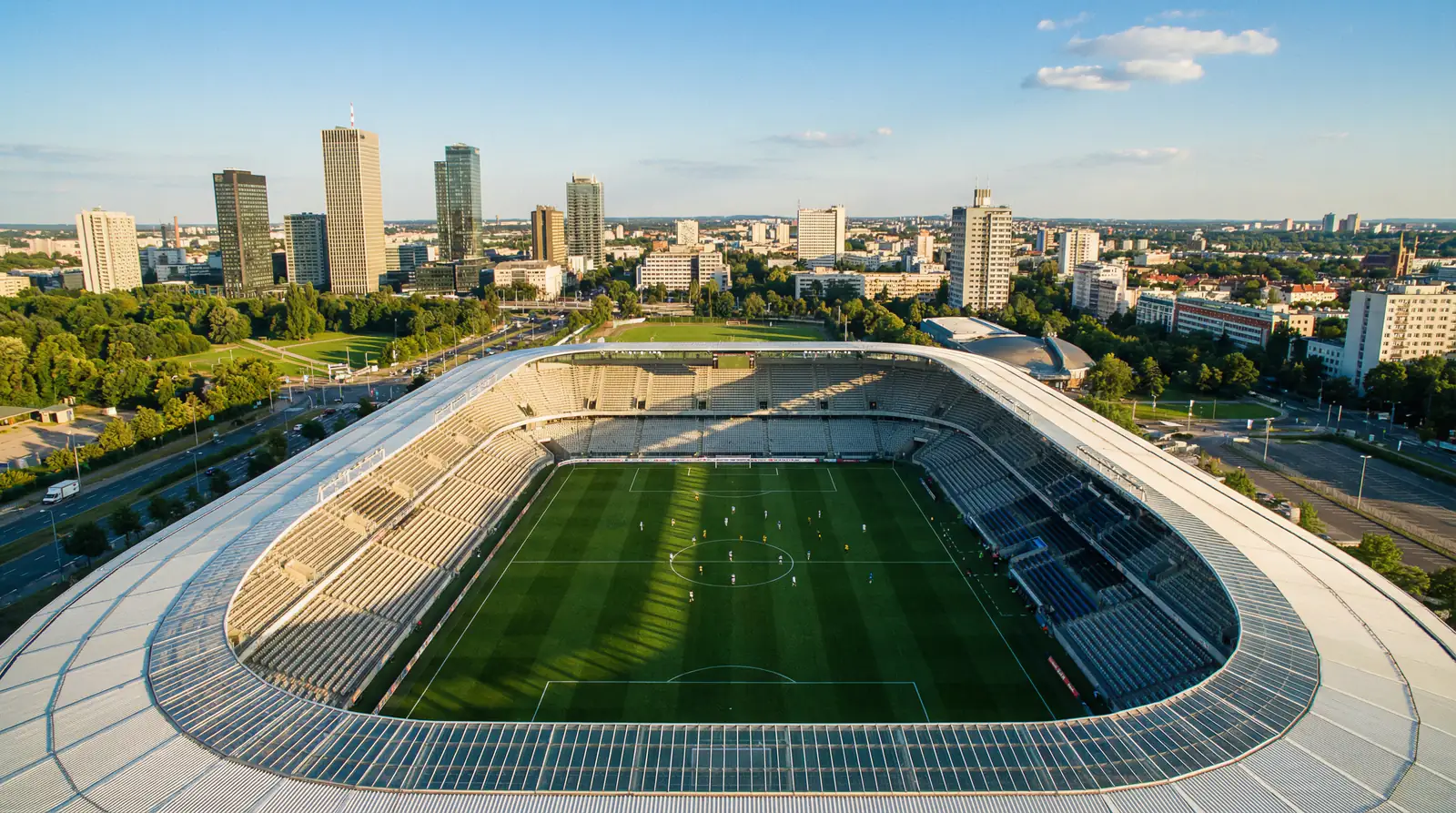
Sixteen stadiums, three countries, four time zones, and one question no punter ever thinks to ask: does the venue matter for my bet? After nine years of covering major tournament wagering, I can tell you that it absolutely does. A match played at 2,240 metres altitude in Mexico City produces different football from a match played at sea level in a climate-controlled dome in Los Angeles. The team accustomed to those conditions holds an edge the head-to-head odds rarely account for. The 2026 FIFA World Cup venues are not just backdrops – they are variables, and ignoring them is leaving information on the table.
The 2026 tournament is the first World Cup spread across three nations: the United States hosts 11 stadiums and the lion’s share of matches including the final, Mexico contributes three venues including the opening ceremony at Estadio Azteca, and Canada adds two stadiums on the Pacific and Atlantic coasts. For Kiwi punters, the geography matters beyond the obvious: the All Whites play two of their three group matches at BC Place in Vancouver, the closest World Cup venue to New Zealand. If you are thinking of making the trip, Vancouver is an 11-hour direct flight from Auckland. That is closer than any World Cup venue since Australia bid for 2022.
Eleven US Stadiums: The Main Stage
The United States has never hosted a football tournament of this scale, and the infrastructure reflects that ambition. Eleven stadiums across the country will host group-stage matches, Round of 32 fixtures, quarter-finals, semi-finals, and the final. Every one of them is an NFL or major-league facility repurposed for football, which means capacities north of 60,000, pristine pitch installations (temporary natural grass laid over permanent artificial surfaces in most cases), and the kind of corporate hospitality infrastructure that FIFA craves.
MetLife Stadium in East Rutherford, New Jersey – marketed as the New York/New Jersey venue – hosts the 2026 World Cup Final on 19 July. It seats over 82,000 for football configuration and sits 12 kilometres from Manhattan. The stadium is open-air, which means the final could be played in summer heat that regularly pushes past 30 degrees Celsius in late July. For punters, the climate factor matters: European and South American teams accustomed to temperate conditions will face genuine heat stress in a July final, and that physically favours teams from warmer climates or teams with deeper squads that rotated effectively through the tournament. The final kicks off at 3 p.m. ET – that is 7 a.m. NZT on 20 July, one of the few early-morning fixtures for Kiwis during the tournament.
SoFi Stadium in Inglewood, California – the Los Angeles venue – is an indoor facility with a translucent roof that admits natural light but controls temperature. The All Whites’ opening Group G match against Iran on 16 June (1 p.m. NZT) is scheduled here. The indoor environment neutralises weather and wind, creating a fast, technical playing surface that suits teams with strong possession games. For the All Whites, the climate-controlled conditions remove one variable but introduce another: the noise. SoFi’s enclosed roof amplifies crowd noise to levels that can disrupt communication on the pitch, and the LA crowd for a World Cup match will include significant diaspora communities from both competing nations.
AT&T Stadium in Arlington, Texas – the Dallas venue – is another retractable-roof facility. Summer temperatures in Dallas exceed 35 degrees Celsius routinely, but with the roof closed, the stadium maintains comfortable conditions. AT&T hosts group-stage and knockout matches, and its 80,000-seat capacity makes it one of the tournament’s marquee venues. The artificial-to-natural grass conversion process here is well-tested from previous international fixtures.
Hard Rock Stadium in Miami Gardens, Florida, presents the most extreme climate challenge in the US venue roster. South Florida in June and July delivers temperatures above 32 degrees Celsius with humidity regularly exceeding 80%. The stadium is open-air with a partial canopy. Matches here will be physically brutal, and the over/under goals market should reflect that: late-game fatigue in humid conditions tends to produce either defensive collapses (pushing the over) or energy-sapped stalemates (pushing the under), depending on the teams involved. If you are betting on a Miami fixture, check the matchday weather forecast – it is a material input.
Mercedes-Benz Stadium in Atlanta offers another retractable-roof option with full climate control. Lumen Field in Seattle is open-air but benefits from the Pacific Northwest’s mild summer climate – daytime temperatures in June and July average 20-24 degrees Celsius, making it one of the most comfortable venues in the tournament. The All Whites’ Group G rivals Belgium face Egypt here on 15 June, and the moderate conditions favour technical football over physical endurance.
NRG Stadium in Houston, Levi’s Stadium in the San Francisco Bay Area, Lincoln Financial Field in Philadelphia, Gillette Stadium in Foxborough (marketed as Boston), and GEHA Field at Arrowhead Stadium in Kansas City round out the US venue list. Each carries its own climate profile – Houston’s humidity rivals Miami, while San Francisco’s coastal breezes keep temperatures manageable – and each hosts a mix of group-stage and knockout fixtures. The sheer geographic spread means teams will accumulate significant air miles between matches, and travel fatigue is a genuine factor for sides drawn into groups with venues on opposite coasts.
Three Mexican Venues: Where It All Begins
Mexico has hosted two World Cups (1970 and 1986) and knows the demands better than any nation on Earth. The three Mexican venues – Estadio Azteca in Mexico City, Estadio BBVA in Monterrey, and Estadio Akron in Guadalajara – bring something no US or Canadian venue can: altitude.
Estadio Azteca sits at 2,240 metres above sea level. That number shapes every match played there. At altitude, the ball travels faster through thinner air, long-range shots swerve less predictably, and players without altitude acclimatisation fatigue measurably faster. Mexico and other Central/South American nations train at altitude regularly; European teams do not. The 2026 World Cup opening match – Mexico vs South Africa on 11 June – takes place at the Azteca, and if you are betting on any fixture at this venue, factor in which team has altitude experience and which does not. Teams arriving from sea-level training camps and playing their first match at 2,240 metres historically underperform their pre-match odds by a measurable margin.
Estadio BBVA in Monterrey sits lower at 540 metres – not enough to materially affect performance – but the city’s summer heat is brutal. June temperatures in Monterrey regularly exceed 36 degrees Celsius, and the stadium is open-air. Estadio Akron in Guadalajara (technically in the suburb of Zapopan) sits at 1,566 metres, a moderate altitude that affects fitness-dependent teams but is less severe than Mexico City. Both venues host group-stage and early knockout matches.
For Kiwi punters, the Mexican venues are primarily relevant through the Iran situation in Group G. If Iran’s matches are relocated from US venues to Mexico as part of ongoing FIFA negotiations, the All Whites could find themselves playing at altitude in Mexico City or in the Monterrey heat rather than at SoFi Stadium in LA. That venue change would materially alter the match dynamics – and the odds should reflect it, though they might lag behind the news. Monitoring the geopolitical situation and its venue implications is one of the sharpest edges available for Group G betting.
Two Canadian Venues: The All Whites’ Backyard
Vancouver and Toronto. Two cities, two stadiums, two very different propositions for the All Whites. BC Place in Vancouver hosts New Zealand’s second and third group matches – against Egypt on 22 June and Belgium on 27 June. BMO Field in Toronto sits on the opposite coast and has no All Whites fixtures, but it contributes to the broader tournament schedule with group-stage and Round of 32 matches.
BC Place is a retractable-roof stadium seating approximately 54,000 for football. Its location in downtown Vancouver – walking distance from the waterfront, Gastown, and the city’s main transit hub – makes it one of the most accessible venues in the tournament. For the All Whites, playing twice at BC Place offers a rare advantage: familiarity. The team will train in Vancouver between their first match (SoFi Stadium, LA, 16 June) and the Egypt fixture six days later, and returning to the same dressing room, the same pitch dimensions, and the same crowd atmosphere for the Egypt and Belgium matches reduces the disruption that tournament travel normally creates.
Vancouver’s Kiwi diaspora is substantial – New Zealand-born residents and working-holiday visa holders create a vocal supporter base that the All Whites have rarely enjoyed at a World Cup. The 2010 squad played their three group matches in three different South African cities with minimal New Zealand support. In 2026, two of three matches are in a city where the Kiwi community can organise, fill sections of the stadium, and generate genuine home-ground noise. That is not a variable the odds directly price, but it affects player performance and, by extension, match outcomes.
BMO Field in Toronto is a smaller venue – approximately 30,000 seats in World Cup configuration – with an open-air layout. Toronto in June and July delivers warm, humid conditions with occasional thunderstorms, though nothing as extreme as Miami or Houston. The venue is best known as Toronto FC’s home ground and hosted Canada’s 2026 qualifying campaign, giving the Canadian national team a significant home advantage in any fixtures played there.
Where the All Whites Play: SoFi Stadium and BC Place
Two venues define the All Whites’ World Cup 2026 campaign, and the contrast between them is stark. SoFi Stadium in Los Angeles hosts the opening Group G match – likely Iran vs New Zealand on 16 June, though the venue could change if Iran’s participation status shifts – while BC Place in Vancouver hosts the Egypt and Belgium fixtures on 22 and 27 June.
SoFi is a spectacle: 70,000-plus seats, a translucent ETFE roof that creates a cathedral-like interior, and a playing surface that sits 30 metres below street level. The climate-controlled environment means temperature and humidity are non-factors, which levels the playing field between teams from different climate zones. For the All Whites, the SoFi match is the tournament opener – the first World Cup fixture in 16 years – and the emotional intensity of that occasion will be a factor regardless of the venue’s physical characteristics. The LA football community includes significant Iranian, Egyptian, and Belgian diaspora populations, so the atmosphere will be heavily influenced by the opposing team’s supporters.
BC Place offers the All Whites something closer to home. The stadium’s location on Canada’s Pacific coast makes it the geographically closest World Cup venue to New Zealand – a fact that matters for travelling supporters planning a once-in-a-generation trip. Vancouver’s climate in late June is mild: daytime temperatures between 18 and 23 degrees Celsius, low humidity, and long summer daylight hours that extend past 9 p.m. local time. The retractable roof can open or close depending on conditions, and FIFA will make that call based on matchday weather. For football quality, these are near-ideal conditions – cool enough to sustain high-intensity pressing, dry enough for a fast surface, and comfortable enough for 90 minutes of full-throttle competition.
From a betting perspective, the BC Place matches favour the All Whites more than SoFi does. The quasi-home crowd, the mild climate, and the familiarity of playing two matches at the same venue within five days all tilt the playing conditions slightly toward New Zealand. If the pre-match odds do not account for these subtle advantages – and they rarely do in the opening round of pricing – there may be value on the All Whites in both the Egypt and Belgium fixtures that the SoFi match does not offer.
Pitch Conditions, Climate and Altitude
Every World Cup generates pitch controversies, and the 2026 tournament is uniquely vulnerable. Most US stadiums use permanent artificial turf for their NFL tenants and install temporary natural grass for football events. The quality of these temporary surfaces has improved dramatically since the disastrous pitches at the 2016 Copa America Centenario – also played in US NFL stadiums – but the risk of surface degradation mid-tournament remains real, particularly in venues hosting multiple matches within short turnaround windows.
FIFA requires natural grass for all World Cup matches, and the Grass Master hybrid system (natural grass reinforced with synthetic fibres) is the likely standard across most venues. The turf installation timeline typically begins 8-10 weeks before the opening match, and pitch quality depends on local climate, sunlight exposure, and irrigation. Indoor venues like SoFi and Mercedes-Benz Stadium face additional challenges: natural grass needs sunlight, and enclosed roofs limit it. Grow lights and UV supplementation compensate, but the pitch in an indoor venue is almost always slower and softer than an outdoor surface – a factor that benefits technically skilled teams over athletic, pace-dependent sides.
Climate variation across the 16 venues spans a remarkable range. From Seattle’s 20 degrees and dry Pacific air to Miami’s 33 degrees and 85% humidity, the physical demands on players differ match to match. Teams drawn into groups with venues in different climate zones – say, a group-stage opener in Houston followed by a second match in Seattle – must manage thermal adaptation alongside tactical preparation. For punters, the question is straightforward: does the team have the squad depth and physical conditioning to perform in these conditions? Teams from temperate European climates that play their first match in Miami’s humidity and their second in Dallas’s heat are at a measurable disadvantage compared to teams from tropical or subtropical nations who face those conditions routinely.
Altitude in Mexico City (2,240 metres) and Guadalajara (1,566 metres) is the single most impactful venue variable in the tournament. Research on football performance at altitude consistently shows that unacclimatised teams experience a 5-8% reduction in high-intensity running distance compared to sea-level matches. That translates to fewer pressing sequences, slower recovery between sprints, and visible fatigue from the 60th minute onward. If you are betting on a match at Estadio Azteca, the altitude advantage for the acclimatised team is a quantifiable edge that the pre-match odds often underweight.
For the All Whites’ World Cup 2026 match schedule, the venue factor is relatively benign: SoFi’s controlled environment and BC Place’s mild Pacific climate present no extreme conditions. New Zealand’s main challenge is the travel distance from home – approximately 11 hours by air to Vancouver, 13 to Los Angeles – and the 17-hour time zone shift from NZST to Pacific Time. Jet lag management in the weeks before the tournament will quietly determine whether the All Whites arrive in North America fresh or flat, and that preparation does not show up on any TAB NZ market.
The Venue Factor in Your Punts
Nine tournaments of data have taught me that venue is the most underrated variable in World Cup betting. Punters study form, rankings, head-to-head records, and squad depth – all of which matter – but rarely check the altitude, the forecast, the pitch type, or the travel distance between a team’s previous and current venue. These are small edges individually, but they compound across a 104-match tournament, and they are particularly potent in the group stage where information about team fitness and acclimatisation is scarcest.
My pre-match routine for every World Cup fixture includes three venue checks: temperature and humidity at kick-off time (available from any weather service), altitude of the stadium (a fixed data point), and days since the team last played at a different venue (travel fatigue indicator). If two of three factors favour one team over the other, that information feeds into my odds assessment alongside the standard form and ranking data. It does not override the fundamentals – a team is not going to beat a vastly superior opponent solely because of altitude advantage – but it nudges the implied probability by 2-4 percentage points in the right direction, and at a World Cup, 2-4 points is often the difference between value and no value.
The 2026 World Cup venues are as diverse as any tournament has ever offered. Use that diversity. Every stadium on this list tells you something about the match that will be played inside it, and that information is free. The punter who reads the venue is the punter who reads the market more accurately.
