
FIFA World Cup 2026 Betting
BC Place World Cup 2026 — All Whites' Vancouver Venue
 Available in US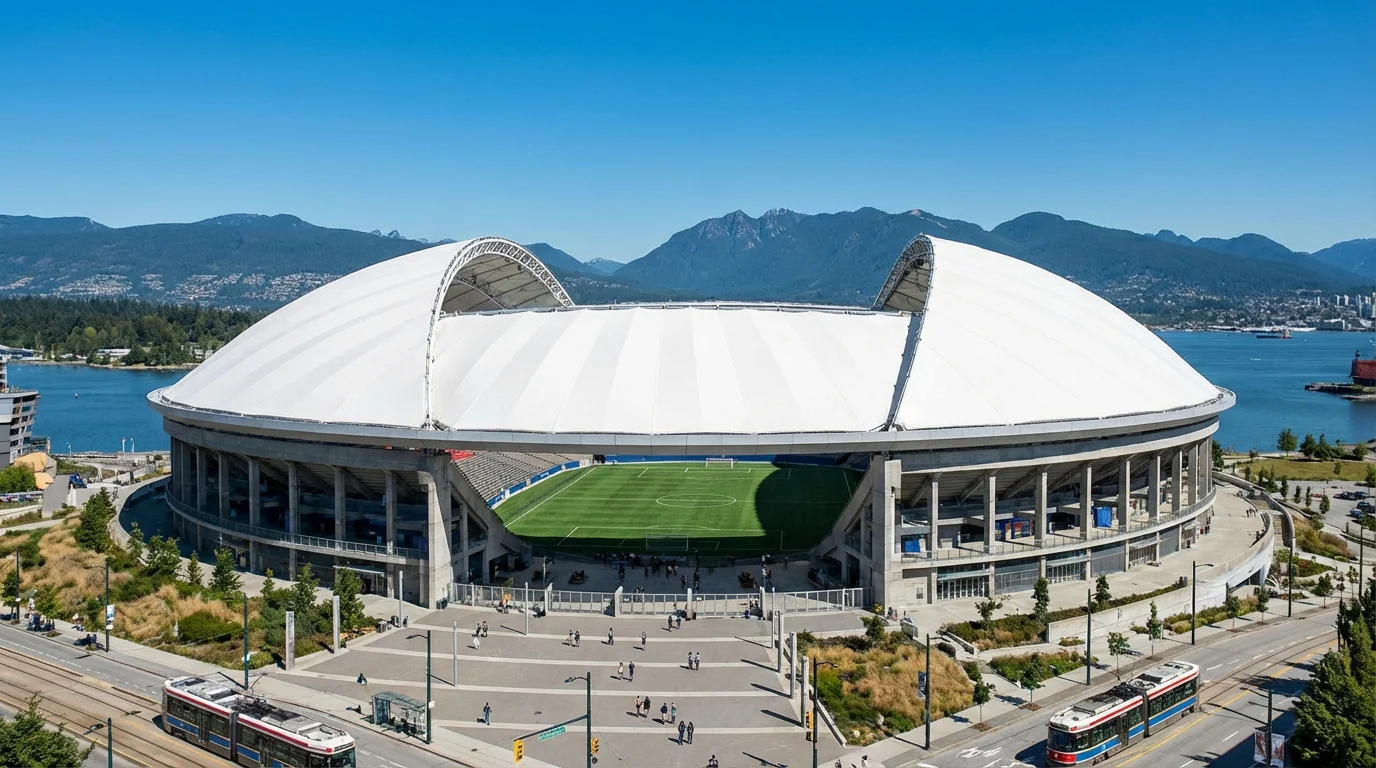
When the draw placed two of the All Whites’ three group matches at BC Place in Vancouver, I checked the flight time from Auckland. Twelve hours direct on Air New Zealand. That is closer than any European World Cup venue has ever been to Kiwi soil, and it matters — not just for travelling fans, but for the atmosphere inside the stadium and the psychological edge that a semi-familiar setting can provide to a squad playing on the world’s biggest stage for the first time in 16 years.
About BC Place
I have covered matches at stadiums across four continents, and BC Place stands out for one reason that most previews overlook: the retractable roof. Vancouver’s June weather is unpredictable — sunny one hour, drizzling the next — and the ability to close the roof transforms BC Place from an outdoor venue into a controlled environment where pitch conditions remain consistent and the acoustics amplify crowd noise. That has tactical implications. Teams that rely on set-piece delivery benefit from a dry, predictable ball flight. Teams that press high benefit from a pitch that remains fast and true regardless of weather. The All Whites tick both boxes.
BC Place opened in 1983 and was extensively renovated between 2009 and 2011, when the retractable roof replaced the original air-supported dome. The venue seats approximately 54,500 for football configuration — smaller than some American World Cup venues but intimate in a way that generates intensity. It served as the main stadium for the 2015 FIFA Women’s World Cup, hosting the final between the United States and Japan, and has since become the permanent home of the Vancouver Whitecaps in MLS. The playing surface is natural grass laid over panels specifically for the World Cup, replacing the usual artificial turf. FIFA mandated natural grass at all 2026 venues, and BC Place’s installation has been tested over multiple events to ensure playing quality meets international standards.
For Kiwi punters, the stadium’s intimacy is a factor worth pricing into your bets. In a 54,500-seat venue with a closed roof, a vocal contingent of two or three thousand travelling New Zealand supporters can generate disproportionate noise. Contrast that with SoFi Stadium in Los Angeles, which holds over 70,000 and where the same number of Kiwi fans would be swallowed by the crowd. BC Place is where the All Whites have the best chance of creating something close to a home atmosphere — and home advantage, even a manufactured version, is worth roughly half a goal in most betting models.
World Cup 2026 Matches at BC Place
BC Place hosts matches from three different groups across the group stage, plus potential knockout fixtures. The confirmed group-stage schedule includes the following matches relevant to Kiwi punters.
| Date (NZT) | Match | Group | Kick-Off (NZT) |
|---|---|---|---|
| 22 June | New Zealand vs Egypt | G | 2:00pm |
| 27 June | New Zealand vs Belgium | G | 4:00pm |
Both All Whites fixtures at BC Place kick off during NZ afternoon hours — 2pm and 4pm NZT respectively. That scheduling is ideal for Kiwi viewers: you can watch from the office break room, the living room, or the pub without rearranging your day. It is also ideal for live betting, where afternoon kick-offs in your local time zone mean you are alert, focused, and able to react to in-play market movements rather than fighting fatigue at 3am.
The Egypt match on 22 June is the one I have identified as the All Whites’ most important fixture of the tournament. Win or draw against Egypt at BC Place, and the path to knockout qualification opens. The Belgium match on 27 June carries lower expectations but higher drama — the final group match, simultaneous kick-offs, and the possibility that a result here could secure a historic advancement. Both matches being at BC Place gives the All Whites continuity: same dressing room, same pitch dimensions, same journey from the team hotel. In a tournament where every marginal advantage matters, that familiarity is not trivial.
All Whites at BC Place: Egypt and Belgium
Darren Bazeley will have six days between the opening match against Iran in Los Angeles and the Egypt fixture at BC Place. That is enough time to travel north, adjust, train at the venue, and build the kind of matchday routine that produces peak performance. The All Whites essentially set up camp in Vancouver for the remainder of the group stage — two matches, one city, one stadium. Egypt and Belgium, by contrast, will have played their other matches in Seattle before travelling to Vancouver. The travel is short, but the disruption is real: different hotels, different training facilities, different matchday logistics. It is a small edge, but small edges accumulate.
The Egypt match is where that edge could prove decisive. Egypt will play a low block, absorb pressure, and look to release Salah on the counter. BC Place’s closed-roof environment should suit the All Whites’ approach: high pressing, physical midfield play, and set-piece delivery from wide areas. A dry, fast pitch favours the team that plays on the front foot, and New Zealand under Bazeley have shown they are willing to press high against technically superior opponents. The crowd factor amplifies this — if the Kiwi contingent can generate early noise and the All Whites start on the front foot, Egypt’s game plan of quiet control and patient counter-attacks becomes harder to execute.
Against Belgium on 27 June, the dynamic shifts. Belgium are the group favourite and will likely arrive at BC Place needing only a point to confirm top spot. If Belgium have already beaten Egypt and Iran, expect rotation — which means the All Whites could face a second-string Belgian side at a venue where New Zealand hold the crowd advantage. That scenario is the dream for Kiwi punters: back the All Whites on the draw no bet market against a rotated Belgium in front of a partisan crowd. The price in that scenario could sit around 3.50 to 4.00, representing genuine value for a plausible outcome.
Vancouver for Kiwi Travellers
Vancouver is the natural destination for Kiwi World Cup travellers, and the numbers support that instinct. Air New Zealand operates direct flights from Auckland to Vancouver, the Kiwi diaspora in British Columbia numbers in the tens of thousands, and the city’s Pacific Rim culture means New Zealanders feel less like tourists and more like locals. The timezone difference is manageable — Vancouver is UTC-7 in summer, meaning New Zealand is 19 hours ahead. You lose a day flying over, but you gain the energy of being in a World Cup host city.
For punters making the trip, the live-betting angle is significant. Being inside BC Place during a match gives you access to atmospheric information that no television broadcast captures: how the teams warm up, which players look sharp in the tunnel, how the crowd composition splits between New Zealand and opponent supporters. None of this is insider information — it is publicly observable context that sharpens your in-play decisions. If you are placing live bets on TAB NZ from your phone inside the stadium, you have an informational edge over someone watching a delayed stream at home.
Pitch and Climate Conditions
Vancouver in late June averages daily highs around 21 degrees Celsius with low humidity — comfortable playing conditions that favour neither team’s physical preparation. The retractable roof eliminates weather as a variable entirely if closed, and FIFA’s protocol for the 2026 World Cup allows the roof to be closed at the referee’s discretion based on conditions. For betting purposes, assume the roof will be closed for evening kick-offs and potentially for afternoon matches if rain is forecast. Closed-roof matches at BC Place historically produce slightly higher-scoring games in MLS — the consistent conditions and amplified noise create an environment where attacking teams thrive.
The natural grass overlay is a factor worth noting. BC Place’s usual artificial surface has been replaced with a modular natural grass system for the World Cup. These systems have improved significantly since their early use, but they still play slightly differently from established natural pitches — the ball tends to sit up more on the surface, which benefits players who prefer to play the ball early rather than dribble past opponents. For the All Whites, whose attacking approach relies on early crosses to Chris Wood and direct passes into feet, this surface characteristic is a quiet advantage.
The complete World Cup 2026 venues guide covers all sixteen stadiums, but BC Place is the one Kiwi punters should know intimately. Two matches, two opportunities, one stadium that could become the backdrop for the greatest moment in New Zealand football history.
