
FIFA World Cup 2026 Betting
World Cup 2026 Groups - Full Draw, Odds & NZ Group G Guide
 Available in US
Twelve groups. Forty-eight teams. And for the first time since FIFA expanded the World Cup, every Kiwi punter has a personal stake in the draw – because our team is in it. I have been modelling group stage outcomes since the draw was announced, and the 2026 format throws up more pricing anomalies than any previous tournament. The reason is structural: twelve groups of four with the top two plus eight best third-placed teams qualifying means that nearly two-thirds of all participants advance. That changes the incentive structure of every final matchday, reshapes how bookmakers price “to qualify” markets, and creates value opportunities that did not exist under the old 32-team system.
I am going to start where every Kiwi’s eyes go first – Group G, the All Whites’ pool – and then work through every other group with a specific focus on what each one means for your punts. Not every group will have a bet worth making, and I will tell you which ones to skip as honestly as which ones to target.
How the 12-Group Format Works
Before the 2026 draw, the last time FIFA used twelve groups at a World Cup was never. The format is entirely new, and that novelty is both an opportunity and a trap for punters who try to apply old mental models. Here is exactly how it works, because the details matter more than you might think.
Each group contains four teams. They play a round-robin of three matches per team – six matches per group, 72 group stage matches total. The top two finishers from each group qualify automatically for the Round of 32, producing 24 teams. The remaining eight spots go to the best third-placed teams across all twelve groups, ranked by points, goal difference, goals scored, and then fair play record as tiebreakers. That means 32 of 48 teams advance – a qualification rate of 66.7%, compared to 50% under the old format.
The mathematical consequence is profound. Under the previous system, a team needed roughly six points (two wins) to be confident of advancing. Under the 2026 system, four points – one win and one draw – will almost certainly be enough for a third-place qualification in most groups. Even three points could be sufficient if a team’s goal difference is favourable relative to third-placed finishers in other groups. For a team like New Zealand, this is not a technicality – it is the difference between “we need to beat two of our three opponents” and “we need one good result and one decent one.”
The third-place route also introduces a strategic wrinkle in the final round of group matches. A team sitting on four points after two games knows it is already through. Does it rest players for the Round of 32? That decision affects its opponent’s odds, the group’s final standings, and the entire bracket structure. Bookmakers cannot fully model these situational incentives, which is why final-matchday betting in the group stage has historically produced the best value at World Cups – and in 2026, that effect will be amplified by the third-place safety net.
One more structural note: the Round of 32 draw is partially seeded. Group winners from Groups A through F face third-placed teams, while group winners from Groups G through L face runners-up. This means that if the All Whites were to win Group G – an unlikely but not impossible scenario – their Round of 32 opponent would be a third-placed qualifier from another group, a significantly easier path than facing a group runner-up from a pool containing a major favourite.
Group G: Belgium, Iran, New Zealand, Egypt – The Kiwi View
No group at this World Cup will be dissected by New Zealand punters as intensely as Group G. I have already run preliminary models on every permutation, and the picture that emerges is more nuanced than the “Belgium win the group, everyone else fights for scraps” narrative the international media has adopted.
Belgium are the clear favourites, ranked around eighth in the world, with a squad that despite its ageing core still features Kevin De Bruyne, Jeremy Doku, and Amadou Onana. Their group stage odds to finish first will be somewhere around 1.45 to 1.60 – short enough that backing Belgium to top the group is a near-certainty price with very little return. The value on Belgium is not in the group winner market but in their individual match markets: how many goals they score, whether they keep clean sheets, and whether their ageing defence can cope with the pace of younger squads.
Iran’s situation is unprecedented. Following the military developments involving the United States and Israel in February 2026, Iran’s participation is uncertain. The Iranian Football Federation has stated they will not boycott the World Cup itself but are negotiating with FIFA to relocate their matches from US soil to Mexican venues. No official withdrawal has been filed as of March 2026, and FIFA has not confirmed any replacement team. For punters, this creates a unique market condition: Iran’s group odds may not accurately reflect their actual squad strength because the uncertainty itself suppresses their price. If Iran do compete and field their first-choice squad, they are a significantly better team than their 2026 odds will suggest. If they withdraw or field a weakened squad, the group opens up dramatically for New Zealand and Egypt.
Egypt, led by Mohamed Salah, are the All Whites’ defining opponent. The match on 22 June at BC Place in Vancouver – 1pm NZT – is the fixture that determines whether this campaign is a three-game holiday or a historic moment. Egypt qualified through a tough CAF pathway and possess individual quality through Salah, Mostafa Mohamed, and Trezeguet that exceeds anything in the New Zealand squad. But Egypt have historically underperformed at World Cups relative to their talent – their last appearance in 2018 produced zero points and an early exit. If that pattern holds, New Zealand’s chance of taking points from this match is higher than the raw odds will imply.
The All Whites’ realistic path is clear: target the Egypt match for a result, hope the Iran situation works in their favour for the opening game on 16 June at SoFi Stadium in Los Angeles (1pm NZT), and play Belgium with nothing to lose in the final match on 27 June at BC Place (3pm NZT). Four points from three games would put New Zealand in strong contention for a best third-place spot. The schedule itself is a minor advantage – two of three matches at BC Place in Vancouver, the closest World Cup venue to New Zealand, where Kiwi fans in the stands could create a genuine atmosphere. The kick-off times are ideal for New Zealand viewers: 1pm and 3pm NZT, perfect for afternoon viewing without any alarm-clock heroics.
The other Group G fixtures matter for All Whites punters too. Belgium vs Egypt on 15 June at Lumen Field in Seattle (8am NZT the following day) sets the tone – if Belgium dominate Egypt, it suggests Egypt will be more desperate and more dangerous when they face New Zealand a week later. Belgium vs Iran on 21 June could reveal whether Iran’s squad is at full strength or depleted. And Egypt vs Iran on 26 June, played simultaneously with New Zealand vs Belgium, determines the final standings in what could be an agonising afternoon of results watching for Kiwi fans. The complete Group G breakdown with match-by-match odds goes deeper into every fixture and qualification scenario.
Groups A to F: Key Storylines for Punters

Group A opens the tournament in Mexico City with the hosts against South Africa on 11 June. Mexico, South Korea, South Africa, and a UEFA Playoff D qualifier (one of Czechia, Ireland, Denmark, or North Macedonia) make this a pool where the top two spots feel predetermined – Mexico and South Korea are levels above the other two on paper. But Mexico’s opening-match record at home World Cups is actually mixed: they lost to the USA in the first round of the 1994 tournament hosted in the same country. The value play in Group A is backing South Korea to top the group at generous odds, because their squad depth and tactical evolution under recent management cycles has been underappreciated. Mexico’s home advantage will compress their odds to the point where backing them carries poor return for the risk.
Group B features Canada, Switzerland, Qatar, and a UEFA Playoff A team that could be Italy. If Italy qualify, this becomes one of the most fascinating groups in the tournament – three teams capable of winning it, with Qatar as the obvious weak link. If Italy do not qualify, Switzerland become overwhelming favourites and the group loses its punting appeal. I am holding my Group B bets until the playoff result is confirmed, and I suggest you do the same.
Group C is where the dark horse money concentrates. Brazil lead the group, but Morocco are legitimate contenders to finish first given their defensive organisation and Brazil’s recent inconsistency. Scotland have the quality to finish second or third, and Haiti are debutants who could concede heavily or surprise – their Caribbean qualifying showed both possibilities in equal measure. The value bet in Group C is Morocco to top the group, likely available around 3.00 to 4.00, which underestimates how much the 2022 semi-finalists have improved. The total goals market across Group C matches could also be profitable: Brazil vs Morocco has the profile of a tight, low-scoring affair, while Brazil vs Haiti could produce four or five goals.
Group D has the host nation advantage factor. The United States are in with Paraguay, Australia, and a UEFA Playoff C winner. Playing on home soil in front of massive crowds, the USA will be backed heavily by the American public, which could suppress their odds below fair value. Paraguay and Australia are the teams I am watching – Paraguay’s defensive resilience from the South American qualifiers makes them a dangerous opponent in low-scoring matches, and the Socceroos carry enough talent to reach the Round of 32 through the third-place route. If you are building a multi-bet that needs a “to qualify” leg from Group D, Australia at around 2.00 to 2.50 is a cleaner option than backing the USA at odds that already factor in home advantage.
Group E looks straightforward on paper – Germany, Côte d’Ivoire, Ecuador, Curaçao – but the second spot is genuinely contested. Côte d’Ivoire won the 2023 Africa Cup of Nations and have the tactical pedigree and individual talent to push Germany. Ecuador have been a consistent World Cup presence since 2002 and know how to grind results in difficult conditions. The value in Group E is the “group stage total goals” over market: Germany will attack, Côte d’Ivoire play expansively, and Ecuador’s high-altitude qualifying style translates to fast-paced football at sea level. This group should produce goals.
Group F – Netherlands, Japan, Tunisia, and a UEFA Playoff B team – is the group I find hardest to model because it depends so heavily on the playoff identity. Japan were exceptional at the 2022 World Cup, beating Spain and Germany in the group stage, and their squad has only deepened since. If the Netherlands drop points against Japan, the group opens up completely. Tunisia are disciplined and difficult to beat, as they demonstrated by drawing with Denmark and France at the last World Cup. My early lean is Japan to qualify from Group F at whatever odds are offered – they are chronically underpriced relative to their actual tournament capability.
Groups H to L: More Value, More Drama
Group H is the one that makes neutral punters salivate: Spain, Saudi Arabia, Uruguay, and Cape Verde. Spain are the Euro 2024 champions and will be heavy favourites, but Uruguay – a two-time World Cup winner with a streetwise squad – are capable of making this very uncomfortable. The Spain vs Uruguay match will be one of the most heavily bet group stage fixtures of the tournament. Saudi Arabia carry the memory of their 2022 opening-day defeat of Argentina but followed it with two losses; their pricing will be inflated by that single result, which means the value in Group H sits with Uruguay “to qualify” at what should be reasonable odds around 1.60 to 1.80. Cape Verde are making their debut and will be outmatched, but they have the defensive structure to keep scorelines respectable.
Group I pairs France with Senegal, Norway, and an intercontinental playoff winner. France will walk through this group barring an extraordinary collapse. The only question is whether Senegal – Africa Cup of Nations contenders with genuine Premier League talent throughout their squad – can claim second place ahead of Norway. Erling Haaland in a World Cup is a fascinating prospect for player prop markets: his goal-scoring record at club level is historic, but he has yet to translate it to a major international tournament. Backing Haaland in the “to score in every group match” prop – if available – is tempting but high-risk given Norway’s overall creative limitations beyond their talisman.
Group J is Argentina’s group, featuring Algeria, Austria, and Jordan. The defending champions should top this comfortably. The real battle is for second and third, where Algeria’s pace and physicality matches up interestingly against Austria’s structured European style. Austria reached the Euro 2024 round of sixteen and have a cohesive squad built around Bundesliga players. Algeria are talented but inconsistent. Jordan are debutants riding the momentum of their 2024 Asian Cup final appearance. For punters, Group J is a pass on most markets – Argentina’s dominance compresses the odds to the point where the risk-reward ratio on any other outcome is poor. If you insist on a Group J bet, Austria “to qualify” via the third-place route offers the best mathematical value.
Group K brings Portugal and Colombia together, joined by Uzbekistan and an intercontinental playoff qualifier. Portugal vs Colombia is a genuine spectacle with betting implications for the entire bracket – the group winner gets a more favourable Round of 32 draw, and both teams have the squad depth to prioritise that advantage. Uzbekistan are making their second World Cup appearance and carry more quality than their ranking suggests; Eldor Shomurodov and other European-based players give them genuine attacking threat. The value bet in Group K is the over 2.5 goals line across the Portugal and Colombia matches – both teams attack with width and pace, and their head-to-head should produce an open, high-scoring contest.
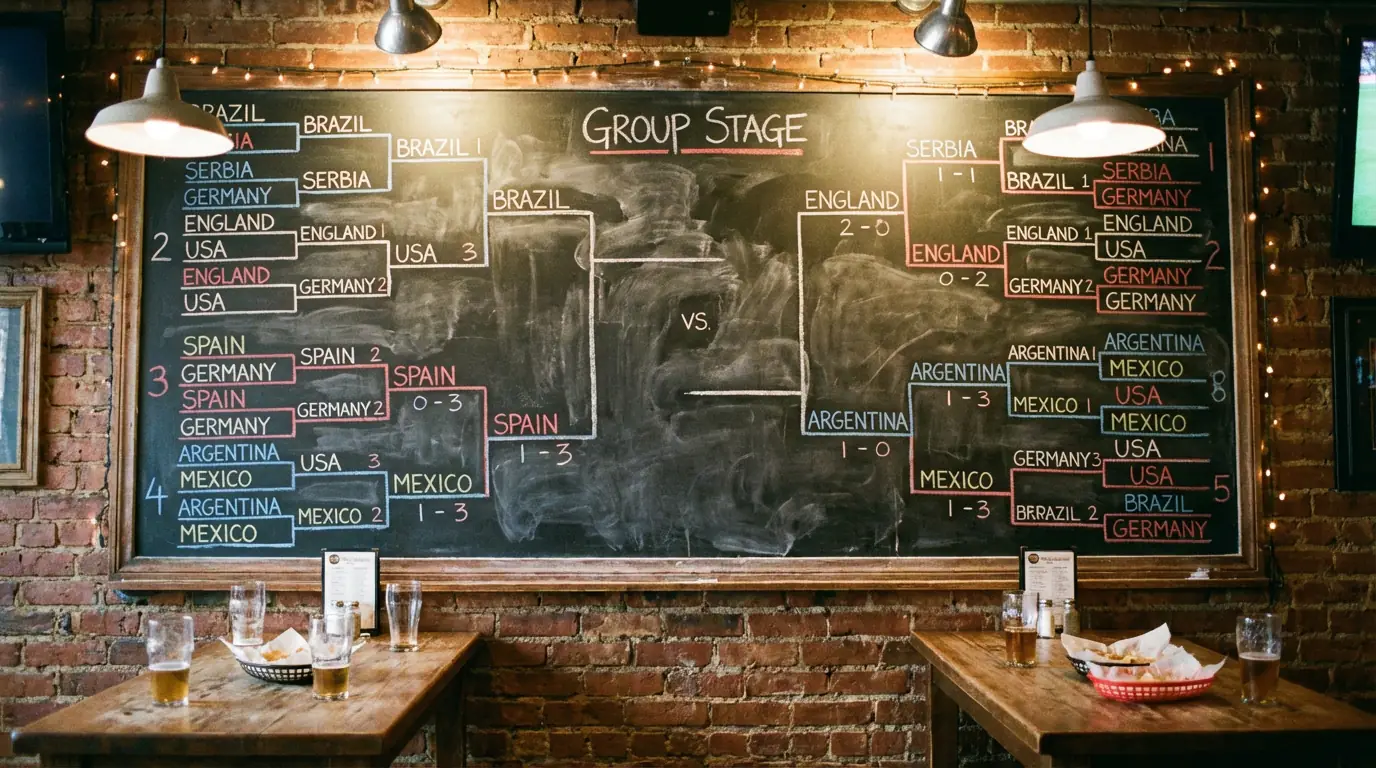
Group L closes the draw with England, Croatia, Ghana, and Panama. England and Croatia have met at the last two World Cups – Croatia won the 2018 semi-final, England won the 2022 group match – and their rivalry adds narrative tension that the betting market struggles to price accurately. Emotional matchups between teams with recent history tend to produce tighter, more cautious football, which means the draw and under 2.5 goals markets deserve attention in the England vs Croatia fixture. Ghana are a wildcard with pace and energy but questionable defensive depth, and Panama return with limited expectations after their debut in 2018. For Kiwi punters who follow the Premier League closely, Group L is the most familiar pool in the entire draw – you watch these players every weekend on Sky Sport – and that familiarity is an analytical edge if you use it to assess current player form rather than defaulting to national team reputation. The gap between England’s club-level talent and their tournament-level output is the single most exploitable inefficiency in international football betting, and Group L is where it will be most visible.
Which Group Is the Group of Death?
Every World Cup draw produces the same argument in pubs and comment sections from Wellington to Whangarei: which group is the group of death? In 2026, the answer depends on how you define the term, and the definition you choose has real consequences for how you allocate your betting budget across the group stage.
If the group of death is the pool where the most quality teams are packed together, Group H (Spain, Uruguay, Saudi Arabia, Cape Verde) and Group L (England, Croatia, Ghana, Panama) are the strongest candidates. Both feature a top-tier favourite alongside a second team that would be seeded in any other group. Uruguay are a two-time World Cup winner with a squad that combines South American grit with European tactical sophistication. Croatia still have Luka Modrić’s successor generation emerging, plus the institutional knowledge of three consecutive deep tournament runs. In either group, the fight for the second automatic qualifying spot is a genuine coin flip between two quality sides, which is the classic group of death scenario.
But I think the more useful definition for punters is different: the group of death is the group where the most unexpected eliminations will occur, because those eliminations are where the biggest odds payouts come from. By that measure, Group B – if Italy qualify through the playoffs – becomes the most dangerous pool. Canada, Switzerland, and Italy in one group means at least one established side goes home in the group stage, and the market will struggle to price that three-way battle accurately. If Italy crash out and you have backed Switzerland to top the group at generous pre-playoff odds, the return compensates for the risk. Alternatively, Group K with Portugal and Colombia could produce a shock if one of those heavyweights drops points against Uzbekistan and fails to qualify – and Uzbekistan’s ability to cause an upset should not be dismissed given their recent Asian form.
Is Group G the group of death? Not by the traditional definition – Belgium are clear favourites and should qualify comfortably. But for the All Whites specifically, every group at this World Cup would feel like a group of death, because New Zealand’s FIFA ranking and World Cup experience place them in the bottom tier of the 48 participants. The relevant question is not whether Group G is the hardest pool in the tournament but whether it is a pool where New Zealand can find four points. And the answer, given the Iran uncertainty, the Egypt matchup in Vancouver, and the third-place qualification route, is a cautious yes. That makes Group G one of the more interesting betting propositions in the entire draw, precisely because it is not a classic group of death but a group where the margins between third-place qualification and elimination are razor-thin.
How Third-Place Teams Can Still Advance
The eight best third-placed teams qualifying for the Round of 32 is the single biggest format change in 2026, and it fundamentally alters how you should approach group stage betting. Under the old format, third place was elimination. Under the new format, third place is a second chance – and the mathematics of that second chance are more generous than most punters realise.
With twelve groups, twelve teams will finish third. Eight of them advance, meaning only four go home. Historically, in tournaments that used a best third-place system (Euro 2016 with six groups was the closest comparison, where four of six third-placed teams advanced), four points was a virtual guarantee of advancement, and even three points with a positive or neutral goal difference was usually sufficient. In a twelve-group structure, the bar may be slightly higher because the sample is larger, but four points remains the safe threshold based on my simulations of the possible outcomes.
For Kiwi punters, this means any “to qualify” bet on a team expected to finish third carries better expected value than the raw odds suggest, because the market is still adjusting to the new format. Bookmakers will price “to qualify from Group G” for New Zealand based primarily on their chances of finishing second, with only a partial discount for the third-place route. If you believe the All Whites have a 20% chance of finishing second and a 40% chance of finishing third with enough points to advance, their combined qualification probability is significantly higher than either route alone – and the odds may not fully reflect that combined path.
The goal difference tiebreaker is the critical detail that separates a third-place team that advances from one that goes home. If New Zealand lose 0-3 to Belgium but beat Egypt 1-0 and draw with Iran 0-0, their goal difference is minus two on four points. Whether that is enough depends on how other third-placed teams across the tournament perform. Conceding heavily in even one match can destroy a third-place qualification bid, which is why the defensive approach Bazeley has drilled into the All Whites squad is not just a tactical choice – it is a tournament survival strategy.
This insight extends beyond Group G. Across the entire tournament, I will be looking for “to qualify” bets on teams expected to finish third in their group, particularly in pools where the favourite is dominant and the remaining three teams are closely matched. Groups A, E, and I all fit that profile: a clear top team (Mexico, Germany, France) and a three-way contest for second and third where the third-placed finisher has a strong chance of advancing anyway. The odds on the third-place team “to qualify” in those groups will be longer than the mathematics justify, because the market over-discounts the new qualification route. That is value hiding in plain sight – the kind of structural edge that does not require any insider knowledge, just an understanding of the format and its consequences.
Group Stage Betting Starts with the Draw and Ends with the Data
The world cup 2026 groups are set, the format is new, and the pricing is soft. That combination – novelty, complexity, and market uncertainty – is the best environment a prepared punter can ask for. I have outlined the groups where value concentrates, the structural advantages the third-place route creates, and the specific angles I am targeting for the All Whites in Group G.
The next step is matching these group insights to your bankroll plan and market strategy. The latest outright and group market odds will shift between now and 11 June, but the structural edges I have identified – public bias on favourites, the third-place value discount, and the final-matchday incentive distortions – will persist throughout the group stage. Back the groups you understand, skip the ones you do not, and let the format work in your favour.
