
FIFA World Cup 2026 Betting
Argentina World Cup 2026 - Odds, Squad & Title Defence
 Available in US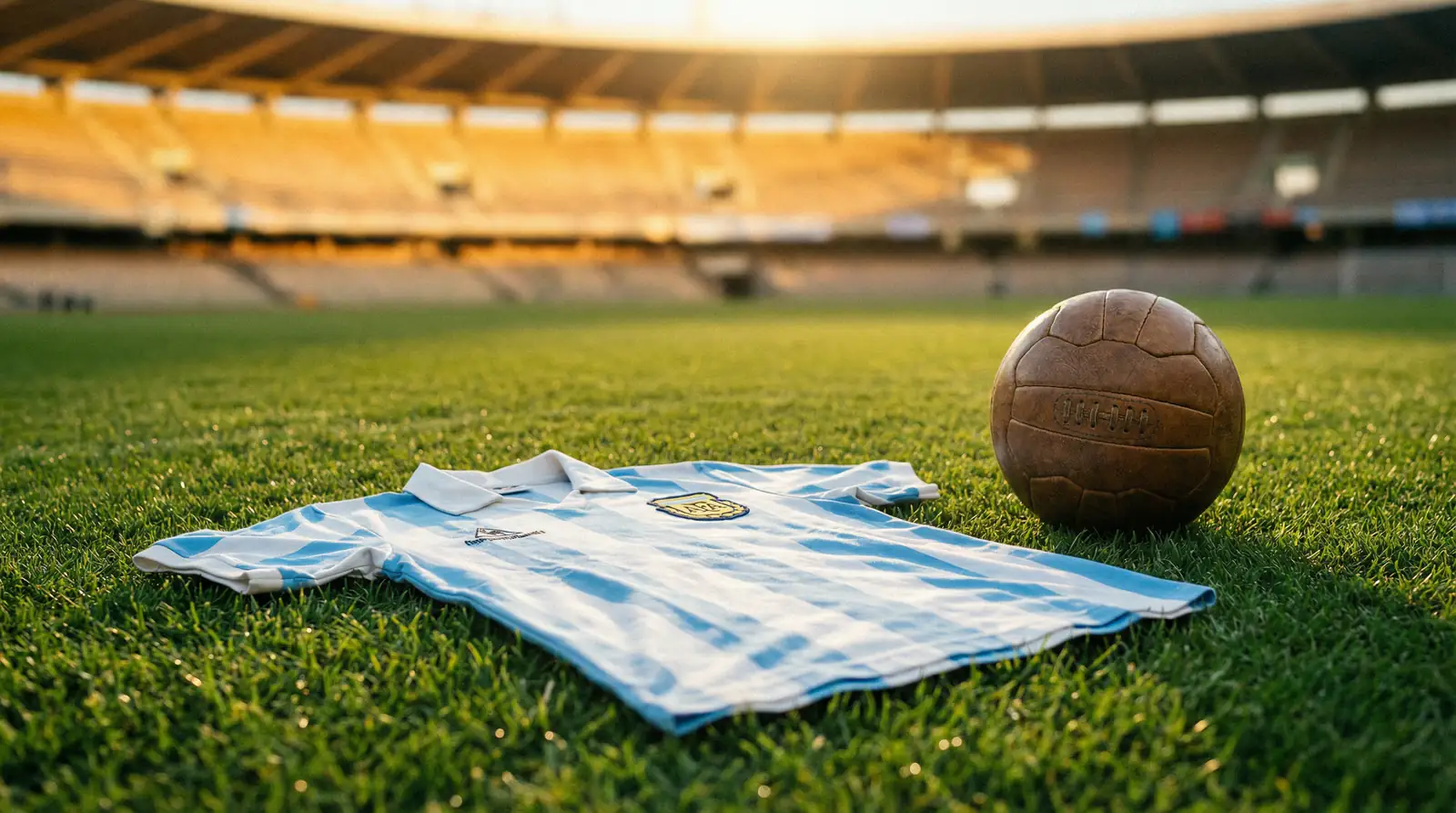
The last time a defending champion arrived at a World Cup without its greatest-ever player, people assumed the dynasty was finished. Then they watched the squad play and realised the system had outgrown the individual. That’s the question facing Argentina in 2026: is the identity that Lionel Scaloni built strong enough to survive without Lionel Messi, or was Qatar 2022 the end of a golden era rather than the start of a new one?
I’ve priced Argentina’s outright odds at every major tournament since 2018, and this is the first cycle where the market genuinely doesn’t know what to do with them. They’re not the clear favourites they were in Qatar. They’re not the undervalued sleepers they were in Russia. They’re sitting in that awkward middle ground where the price reflects reputation more than current form – and for Kiwi punters, that means there’s work to do before you decide whether to back them or fade them.
South American Qualifiers: How Argentina Got Here
CONMEBOL qualifying is a war of attrition. Eighteen matches across two years, played at altitude in La Paz, in tropical heat in Barranquilla, in front of hostile crowds in Santiago. No other confederation demands this much from its qualifying nations, and the results tell you something real about a team’s resilience. Argentina topped the table, but the campaign wasn’t the procession that their squad depth might suggest.
Early results were shaky. Defeats to Uruguay and Colombia in the opening phase raised questions about Scaloni’s tactical flexibility without Messi orchestrating from the number ten role. The midfield transition was particularly rough – matches where Argentina controlled territory but created nothing in the final third, the kind of possession football that looks good on a stats sheet and terrible on a betting slip. By mid-2025, the system had recalibrated. Scaloni moved to a 4-3-3 with more directness through the flanks, and the results followed: seven wins from the final nine qualifiers, eighteen goals scored, four conceded.
The qualifying campaign matters for punters because it reveals what post-Messi Argentina actually looks like. They’re still defensively sound – Emiliano Martínez in goal, Cristian Romero marshalling the backline, a midfield that presses with coordinated intensity. But in attack, they’ve shifted from controlled creativity to explosive transitions, relying on pace from wide positions rather than a genius playmaker unlocking defences with a single pass. It’s a different team, and the odds need to reflect that difference rather than riding on the Qatar hangover.
Their qualifying record also tells you about mentality. Argentina lost three qualifiers and still finished top. That’s the mark of a squad that can absorb setbacks without collapsing – a crucial trait for a 39-day tournament where even the best teams will drop points somewhere. The defeat in Buenos Aires to Uruguay was particularly instructive: Argentina went behind early, lost their shape trying to force an equaliser, and conceded again on the counter. Instead of spiralling, Scaloni used the post-match analysis to restructure his pressing triggers, and the team didn’t concede from a counter-attack in the next six matches. That kind of mid-campaign correction separates genuine contenders from pretenders.
The All Whites, for comparison, went through their OFC qualifying unbeaten but have never been tested by the kind of adversity CONMEBOL demands. The gap in competitive experience between these two squads is enormous. Argentina have played in La Paz at 3,600 metres altitude, in Barranquilla at 35 degrees with 90% humidity, and in Montevideo against a crowd that treats every Argentina match like a cup final. That conditioning – physical and psychological – builds a tournament readiness that no amount of talent can replicate in friendlies.
Key Players: The Post-Messi Generation
Walk into any TAB NZ and ask who leads Argentina now, and most punters will say Julian Álvarez. They’re half right. Álvarez is the focal point of the attack – his movement between the lines, his finishing from tight angles, his willingness to press from the front – but the engine of this team sits deeper.
Enzo Fernández controls the midfield with a maturity that belies his age. At twenty-five, he’s already won a World Cup and a Champions League, and his passing range from central midfield gives Argentina the ability to switch from defensive solidity to attacking thrust in a single ball. Fernández is the player opposition managers will plan around, not because he scores goals but because he makes everyone else’s goals possible. In a multi-bet context, his assists tally is worth tracking – player props on Fernández tournament assists could offer value if the price sits above 5.00.
On the flanks, the picture has evolved. Alejandro Garnacho has forced his way into the starting eleven with raw pace and an unpredictable dribbling style that causes problems for defensive full-backs who prefer structured, predictable wingers. He’s not consistent – Garnacho will beat three men and then misplace a simple pass in the same sequence – but at a World Cup, one moment of individual brilliance can decide a knockout tie. His inclusion gives Argentina a chaos factor they lacked in the latter stages of qualifying.
Defensively, Martínez remains world-class. His penalty shootout record is absurd, and if Argentina reach the knockout stages, his presence between the posts adds tangible value to their odds in any match that goes to extra time. Romero and Lisandro Martínez at centre-back form a partnership that’s both physical and intelligent – they don’t just defend, they initiate attacks with progressive passing that bypasses the opposition midfield entirely.
The depth is genuine. Lautaro Martínez, Alexis Mac Allister, Nicolás González – these are players who’d start for most other World Cup nations. Scaloni can rotate without dropping quality, which matters enormously across a tournament that requires seven matches to win. Mac Allister’s versatility is particularly valuable: he can play as an eight, a ten or even a false nine in emergency, which gives Scaloni tactical shape-shifting options that most managers dream about. If Argentina face a deep-block team in the knockout rounds, Mac Allister can be the one who picks the lock. If they face a high-pressing side, he drops deeper to help Fernández recycle possession under pressure.
The one concern is at full-back. Argentina’s wide defensive positions have been a rotation zone throughout qualifying, with no clear first-choice pairing emerging. Nahuel Molina and Gonzalo Montiel have shared right-back duties, while left-back has been a revolving door. In a tournament where wide areas are crucial – crosses into the box, defensive recovery against pacy wingers – this uncertainty could be exploited by the better teams. It’s not a fatal flaw, but it’s a gap that hasn’t been resolved, and punters should monitor pre-tournament friendlies for Scaloni’s final full-back configuration.
Group J: Algeria, Austria, Jordan
Argentina landed in a group that the bookmakers barely glanced at. Group J features Algeria, Austria and Jordan, and if you’re looking for a group-stage upset, you’ll need to look elsewhere. This is a group where the only question isn’t whether Argentina qualify, but whether they win all three matches.
Algeria are the most credible threat on paper. Their squad blends French-league experience with North African intensity, and they’ve shown at the Africa Cup of Nations that they can compete tactically against well-organised opposition. But Algeria’s record against South American sides is poor, and their pressing game, while effective in CAF qualifying, tends to leave space behind the midfield line that Argentina’s forwards exploit ruthlessly. Expect the match odds to have Argentina around 1.45 to 1.55 – short enough that the value sits in correct score markets rather than the outright result.
Austria bring Bundesliga quality and a disciplined defensive structure. Ralf Rangnick’s influence, if he’s still involved in the programme by June 2026, has made Austria a team that’s difficult to break down but limited in attacking output. Marcel Sabitzer’s energy in midfield and Konrad Laimer’s pressing intensity mean Argentina won’t enjoy the same territorial dominance they expect against Jordan. The match profile against Argentina points to a 1-0 or 2-0, and the under 2.5 goals market is the angle I’d explore. Austria won’t roll over, but they won’t score either. Their defensive record in qualifying was strong – just nine goals conceded across ten matches – and that solidity could keep the scoreline respectable even as Argentina control the ball.
Jordan are the group’s debutants, having qualified through a remarkable Asian qualifying campaign. Their story is compelling – a nation of eleven million making its first World Cup – but their squad depth doesn’t match the top two tiers of Asian football, let alone South American. Argentina should handle this fixture comfortably, and the only betting interest is in the margin of victory and specific goal scorer markets.
For Kiwi punters, Group J’s predictability actually creates opportunity. Argentina to win the group is priced around 1.35, which is too short for a single bet but makes a solid anchor leg in a multi. Combine Argentina group winners with a more speculative leg elsewhere – say, the All Whites to qualify from Group G – and the multi returns something worth having.
Argentina Outright and Group Odds
Here’s where it gets interesting. Argentina’s outright winner odds have drifted since the draw. At the time of writing, TAB NZ has them around 6.50 to 7.50 to win the tournament, which makes them the second or third favourite depending on how France and Spain are priced on any given day. The drift reflects genuine uncertainty about the post-Messi transition rather than a fundamental weakness in the squad.
I think the market is roughly correct at these prices. Argentina have the squad depth, the tactical flexibility, the tournament pedigree and the defensive solidity to win the World Cup. What they lack is the certainty that their attack can produce in knockout situations against elite defensive teams. In Qatar, Messi solved those moments. In 2026, Álvarez and Garnacho need to prove they can do the same under equivalent pressure. That’s an unknown, and unknowns should be priced as risk, which they are.
The group-stage odds are almost irrelevant for Argentina in Group J. To win the group: 1.35. To qualify: 1.05 or thereabouts. Neither price is playable as a standalone bet. Where Argentina’s group odds become useful is in multi construction – they’re one of the safest group-winner legs available, alongside France and Spain, and stacking two or three safe group-winner legs with a speculative outsider creates a multi structure with genuine upside.
Tournament top scorer is another market where Argentina offer angles. Julian Álvarez’s odds will sit around 12.00 to 15.00, reflecting both his goal-scoring ability and Argentina’s likely deep run. Those are reasonable prices, but the real value might be in the “top scorer from South America” or equivalent subsidiary market, where Álvarez faces less competition and the odds widen. Lautaro Martínez’s Golden Boot price will be longer – around 20.00 to 25.00 – but he could easily start two of the three group matches if Scaloni rotates, giving him a platform to accumulate goals against weaker opposition before the knockout rounds begin.
One market I’d avoid entirely is Argentina’s correct group finishing position. At prices of 1.35 to win Group J, the return doesn’t justify the stake even in a multi. And the alternative – Argentina finishing second – pays more but requires a scenario where they drop points against Algeria or Austria, which is possible but hard to model with confidence. Group J is a market to skip, not a market to play.
World Cup Pedigree: Three Stars and Counting
Argentina wear three stars on their shirt, and every one of them tells a story about a different era of the national team. 1978 in Buenos Aires, the tournament of controversy and home-soil passion. 1986 in Mexico, the Maradona tournament, the hand of God, the goal of the century. 2022 in Qatar, Messi’s coronation, the greatest final ever played, the third star that an entire nation wept for.
That pedigree matters for betting because it shapes how Argentina approach tournament football. This is not a team that tightens up in knockout rounds. Argentina have played in six World Cup finals – more than any other nation – and their record in penalty shootouts under Martínez is exemplary. The psychological edge that pedigree provides is real: when an Argentina player walks out for a quarter-final, they carry the institutional memory of a nation that expects to be there, and that expectation breeds composure under pressure.
The data supports the sentiment. Argentina’s knockout-stage win rate at World Cups since 2006 sits above 60%, a figure inflated by Messi-era dominance but also reflective of an organisational culture that prepares for high-pressure moments differently from most federations. The Argentine Football Association invests in sports psychology, in altitude-acclimatisation camps before South American away fixtures, in video analysis infrastructure that rivals club-level operations. These margins compound over a seven-match tournament, and they’re baked into the pedigree that the odds reflect.
Contrast that with the All Whites. New Zealand’s tournament experience amounts to six group-stage matches across two World Cups, with zero wins. Argentina have played 88 World Cup matches, won 47 of them, and reached the knockout rounds in 13 of their 18 tournament appearances. That gap isn’t just historical trivia – it’s embedded in the squad’s DNA, their preparation, their ability to manage the tempo of a match when the stakes escalate. It’s one reason why Argentina consistently outperform their regular-season form at World Cups, and why fading them in knockout markets is usually a mistake.
What Argentina Means for Kiwi Punters
For all the analysis above, the practical question for a New Zealand punter is straightforward: should I back Argentina, and if so, where?
The outright market at 6.50-7.50 is fair value if you believe the post-Messi transition is complete. If you think the attack still lacks a decisive creative force in knockout situations, then the price isn’t generous enough to compensate for the risk. I’m on the fence – my model has Argentina at roughly 14% to win the tournament, which makes 7.00 almost exactly fair. Not value, not a fade. Just a coin flip at the right price.
Where Argentina become more useful is in the structural bets. Group J winner in a multi: reliable anchor. Argentina to reach the semi-finals at around 2.20: decent probability, solid return. Álvarez anytime scorer in individual group matches: playable when the price exceeds 2.50. These are the positions where Argentina’s quality gives you a stable foundation without requiring them to do something extraordinary.
The tournament’s bracket structure also deserves attention. The path from Group J could lead through relatively favourable knockout matchups in the early rounds before a probable semi-final collision with one of the European heavyweights. If Argentina avoid France and Spain until the final four, their route to the showpiece could be smoother than the odds imply. The “to reach the final” market at 3.00-3.50 prices in the difficulty of the full path, but the specific bracket Argentina may draw could make the actual probability higher than the average those odds reflect. It’s a market I’d revisit once the group stage is complete and the knockout draw is confirmed.
For Kiwi punters who want to combine Argentina analysis with All Whites interest, there’s a cross-group angle worth monitoring. If the All Whites finish third in Group G and Argentina top Group J, the draw could pair them in the round of thirty-two. It’s speculative at this stage, but the scenario is worth tracking. If it materialises, the match odds would be extreme – Argentina around 1.15 to 1.20, New Zealand at 15.00 or higher. At those prices, I’d take the match as it comes rather than pre-committing, but the narrative of the All Whites facing the defending champions would make it the most-watched sporting event in New Zealand’s history.
The Verdict on Argentina
Argentina are legitimate contenders but not certainties. The post-Messi transition has been competent, not seamless. The squad depth is among the best at the tournament. Group J presents no meaningful obstacle. The challenge comes in the knockout rounds, where the absence of a transcendent creative talent could be exposed against elite defences that sit deep and force Argentina to create from structured possession rather than transition.
At current odds, Argentina are fairly priced – neither a screaming bet nor a clear fade. The outright market reflects reasonable doubt about the attack. The group and semi-final markets reflect the squad’s undeniable quality. For Kiwi punters, Argentina are most useful as a building block in multi-bets and structural positions rather than a standalone outright punt. Back them to anchor your multi, not to carry it. And keep one eye on the bracket – if the All Whites are still alive when the round of thirty-two draw is confirmed, the possibility of an Argentina-New Zealand knockout match could transform the tournament for every punter in the country.
